

Define
Resources
Define an Issue as a System
Documents
Downloadhttps://youtube.com/playlist?list=PLhqqzScnkli3lv7ipP3slTopLaC5ky87y
This protocol is a guide to conceptualize a challenge or an issue into a system with its boundary, components, relations and environment.

Approach

Methodology
Themes
AgricultureType de ressource
- Handbook
- Video
Trainees
- Bachelor
- Master
- PhD
- Long life learner
Licence
Creative Commons CC BYFarm characterization : Mapping surveys & Systems_Diagrams
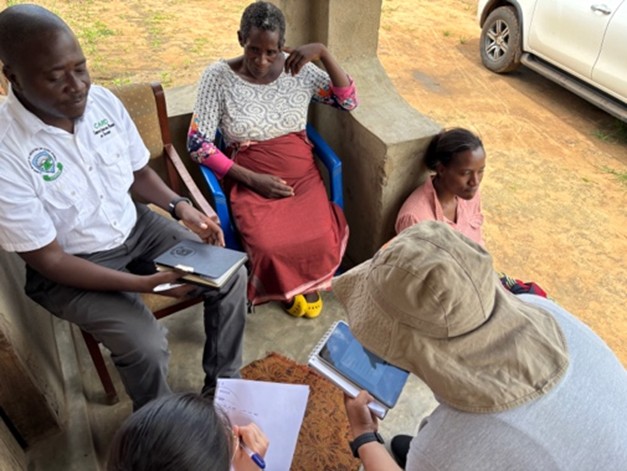
Farm characterization involves a mixed-methods approach to analysing farming systems, combining participatory farm and field mapping, digital farm-household surveys, and systems diagramming. Together, these methods help capture the spatial, socio-economic and systemic dimensions of farming systems and their interdependencies.
Feedback on teaching experience
This tool was used as a practical exercise as part of the two-week intensive course Farming Systems and Rural Livelihoods Analysis, a specialized course in systems science organized in Malawi by CGIAR in collaboration with Wageningen University. Designed for PhD students, the course combined theoretical sessions with practical exercises focused on the analysis of farming systems and rural livelihoods. As part of the practical work, participants were divided into four groups, each bringing together participants from different nationalities and disciplinary backgrounds. Each group worked in a different location, representing contrasting farming systems shaped by differences in agroecological conditions, institutional contexts, and market environments. An overview of the course and the different modules taught is available in the “Capacity Development” section.
Approach
Methodology
Themes
Agriculture Food Land WaterType de ressource
- Course material
Trainees
- Master
- PhD
Training duration
2 days
Licence
Creative Commons CC BY-NCFuzzy Cognitive Mapping for Rural Livelihoods Analysis
Fuzzy Cognitive Maps (FCMs) are participatory modelling tools used to represent how stakeholders perceive complex systems and the causal relationships between their components. FCMs combine elements of systems thinking, participatory research, and semi-quantitative modelling.
In farming systems research, FCMs help capture farmers’ knowledge about interconnected ecological, economic, and social processes, making them particularly valuable in mixed methods studies of agricultural systems.
Feedback on teaching experience
This tool was introduced as part of the two-week intensive course Farming Systems and Rural Livelihoods Analysis, a specialized course in systems science organized in Malawi by CGIAR and Wageningen University. Designed for PhD students, the course combined theoretical and methodological sessions focused on the analysis of farming systems and rural livelihoods. The tool was presented within this theoretical framework as a method for understanding and analysing farming systems and rural livelihoods. The course brought together participants from different nationalities and disciplinary backgrounds, who were divided into four groups working in different locations representing contrasting farming systems shaped by differences in agroecological conditions, institutional contexts, and market environments. An overview of the course and the different modules taught is available in the “Capacity Development” section.
Approach
Methodology
Themes
Agriculture Food LandType de ressource
- Course material
Trainees
- Master
- PhD
Training duration
half-day
Licence
Creative Commons CC BY-NCMemento d'Agronomie Systémique
Documents
DownloadCe memento est destiné aux étudiants en Sciences Agronomiques pour leur permettre d’acquérir et d’utiliser les concepts de base nécessaires à la compréhension des enseignements (cours, TD, rapports) d’Agronomie Systémique (AS).
Comme toute discipline scientifique l’AS peut se définir par ses concepts, ses méthodes et outils et les différentes postures avec lesquelles on les met en œuvre sur des objets et à des échelles spécifiques. Le document est organisé autour de ces différentes facettes de la discipline. La démarche systémique utilisée est basée sur l’analyse des relations structure-fonctions-flux dans les systèmes complexes dynamiques décrite dans un autre document d’enseignement (Wery, 2017 ; Démarche de conceptualisation d’un problème en système en Agriculture).
Les concepts et méthodes présentés peuvent s’appliquer à toutes les formes d’agriculture (intensive en intrants de synthèse, intensive en travail, agroécologique, biologique, de conservation, agroforesterie…), dans tous les secteurs de production (grandes cultures, maraichage, arboriculture, viticulture, fourrages…) et dans toutes les régions (tempérée, méditerranéenne, tropicale…).
Les mots entre guillemets sont la traduction anglaise des termes.

Approach


Methodology
Themes
Agriculture LandType de ressource
- Handbook
Trainees
- Bachelor
- Master
- PhD
Training duration
The handbook was used as a pre-reading or post-reading documents in various courses ranging from a 3h introductory course to agricultural systems for BSc students to a 6 month course on agricultural science for Masters students specializing in agriculture.
Licence
Creative Commons CC BYTransect walks
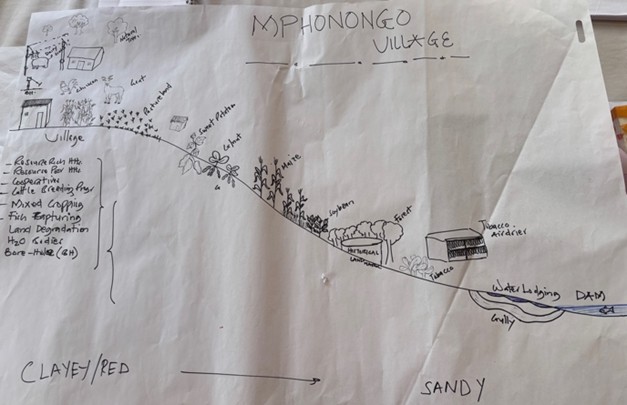
Transect walks are a core method in participatory rural appraisal (PRA) and farming systems research. They involve a systematic walk along a predefined path across a landscape to observe and discuss spatial gradients in biophysical and socio-economic conditions. The method was popularized in participatory development practice (Chambers, 1994) and is widely applied in farming systems analysis to integrate local knowledge with scientific observation.
Feedback on teaching experience
This tool was used as a practical exercise as part of the two-week intensive course Farming Systems and Rural Livelihoods Analysis, a specialized course in systems science organized in Malawi by CGIAR in collaboration with Wageningen University. Designed for PhD students, the course combined theoretical sessions with practical exercises focused on the analysis of farming systems and rural livelihoods. As part of the practical work, participants were divided into four groups, each bringing together participants from different nationalities and disciplinary backgrounds. Each group worked in a different location, representing contrasting farming systems shaped by differences in agroecological conditions, institutional contexts, and market environments. An overview of the course and the different modules taught is available in the “Capacity Development” section.
Approach

Methodology
Themes
Agriculture Food Land WaterType de ressource
- Course material
Trainees
- Master
- PhD
Training duration
1 day
Licence
Creative Commons CC BY-NCWhat is a System?
Link to the video: https://www.youtube.com/watch?v=b3vHLUTzpc0&list=PLhqqzScnkli3lv7ipP3slTopLaC5ky87y&index=1
Link to the video: https://www.youtube.com/watch?v=zWhRnMYIMog&list=PLhqqzScnkli3lv7ipP3slTopLaC5ky87y&index=2
A system in 10 key words

Approach
Methodology
Themes
AgricultureType de ressource
- Website Resource
Trainees
- Master