
abdelradi fadi
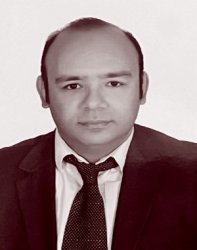
Professionnal title : Professor
Main affiliation : Faculty of Agriculture – Cairo University.
3 gamma st 12613 giza
+201022661239
Presentation
Dr Fadi Abdelradi research focus lies within the field of agricultural value chain analysis, with a special emphasis on price volatility transmission across markets and production efficiency. Recently, Fadi completed two projects: (1) a two-year project called “Improving the fresh produce supply chain network in Egypt” financed by the American University in Cairo (AUC); , (2) a four-year project, financed by PRIMA called "Sustainable Innovation and Governance in the Mediterranean Area for the Water-Ecosystem-Food Nexus". Presently, Dr Fadi Abdelradi is working with a new four-year project, financed by PRIMA called “Operational Adaptation Nexus-Based Systems Solutions in Mediterranean”.Fadi is an associate editor in the Egyptian Journal of Agricultural Sciences and a reviewer for several international journals like Waste Management, Energy Economics, Agricultural Economics, Water Resources Management, International Review of Economics and Finance, Energy Sources, Part B Economics, Planning, and Policy, International Journal of Applied Management Theory and Research, Plos one, Plos one - Climate.
What I can bring to this network ?
Bring experience about farming systems in Egypt- investment options opportunities
- existing farming practices
- outreach to local partners
What I seek in this network ?
- expand my network- participate in events
- join research projects
Abebe Bezaiet Dessalegn
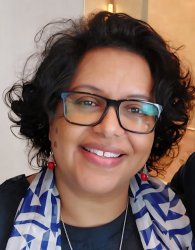
Professionnal title : Other
Researcher and Development Practitioner
Main affiliation : International Center for Agricultural Research in the Dry Areas (ICARDA)
2 Port Said, Victoria Sq, Ismail El-Shaaer Buildin 11742 Cairo
01066318487
Presentation
a Social Scientist with a solid academic background in International Development, International Relations and Public Policy; supported with over 20 years of work experience in a wide range of issues including - sustainable agricultural diversification and intensification, technology adaptation and large-scale adoption, water and land management including reuse of marginal water resources, climate change and resilience of livelihood systems, food security, community engagement and gender inclusion. She currently works with the International Center for Agricultural Research in the Dry Areas (ICARDA) and is based in Cairo, Egypt. Her work primarily focuses on linking agricultural research to development where she directly engages with farmers and national and international partners to promote the adoption and large-scale use of proven agricultural technologies and innovative practices. Her current and past projects at ICARDA span over several countries including Egypt, Iraq, Jordan, Lebanon, West Bank, Tunisia, Syria, Yemen, Pakistan, Kazakhstan, Nigeria, Ethiopia, and Burkina Faso.What I can bring to this network ?
My experience in implementing system-oriented projects on the ground.What I seek in this network ?
Opportunities to learn from others' experiences and to design system-based solutions/models that can be scientifically documented and replicated (after being contextualized).A perspective from small-holder farming systems research
ASSOGBA S. Claude-Gervais

Professionnal title : Professor
Main affiliation : Laboratoire de Recherche sur l'Innovation pour le Développement Agricole / Faculty of Agronomy / University de Parakou
BP1669 000 229 Parakou
0161104886
Presentation
Claude-Gervais ASSOGBA is an Associate Professor in Agro-Socio-Anthropology. He is a lecturer at the Department of Rural Economics and Sociology at the Faculty of Agronomy, University of Parakou in Republic of Benin, West Africa. He obtained his PhD in Agricultural Extension and Rural Sociology at the University of Liege in Belgium in 2014. He heads the Research Unit "Sustainable Production Systems" of the Laboratory Research on Innovation for Agricultural Development (LRIDA) at the University of Parakou. He is the Scientific Secretary of the doctorate training on Sociology of Natural Resources at the Doctorate School of Agricultural and Water Sciences (EDSAE). His researches focus on knowledge and innovations process management, adoption of sustainable agricultural practices (agroecology and organic agriculture). He has an expertise in strategic plan conception, facilitation of innovation platform process and is actively involved in many initiatives promoting agroecology and organic agriculture in Benin and Africa.What I can bring to this network ?
My experiences and expertises in multidisciplinary reaserches conception and implementationWhat I seek in this network ?
Develop partnerships and collaborations for the design and implementation of joint projects relating to sustainable production systems, food systems and climate changeBaudron Frédéric
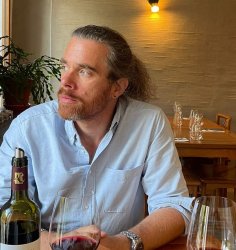
Professionnal title : Doctor
Main affiliation : CIRAD
TA B 115/02 - Avenue Agropolis - Montpellier cedex
+33 (0) 4 67 61 71 67
Presentation
Frédéric Baudron is a Senior Scientist working for the French Agricultural Research Centre for International Development (Cirad), based in Montpellier, France. Prior to this, he was a Principal Scientist working for the International Maize and Wheat Improvement Center (CIMMYT) based first in Addis Ababa, Ethiopia (from 2011 to 2016) and later in Harare, Zimbabwe (from 2016 to 2023).Trained as a tropical agronomist in France, he specialized as a livestock scientist and started his career with a focus on the interface between people (mainly farmers) and wildlife in Zimbabwe (and neighbouring countries). He then carried his PhD on plant production systems at the University of Wageningen (The Netherlands).
He has been involved in a number of research projects in Congo, Ethiopia, Kenya, Rwanda, Tanzania, Zambia, Malawi and Zimbabwe. He has more than 23 years of experience developing solutions with and for smallholders in sub-Saharan Africa.
What I can bring to this network ?
Expertise, network of projectsWhat I seek in this network ?
Collaboration, discussions around methods, new partnershipBebeley Jenneh Fatima
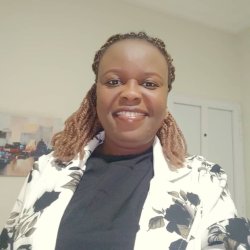
Professionnal title : Doctor
Main affiliation : Ernest Bai Koroma University of Science and Technology, Magburaka, Southern Province, Sierra Leone.
Ernest Bai Koroma University of Science and Techno Makeni
+232 75836933
Presentation
I have extensive experience spanning over 10 years in agronomy, crop science, and farmer participatory evaluation of improved crop production technologies.What I can bring to this network ?
To share knowledge and results obtained in crop modelling research in West Africa and contribute to the system science in agriculture for sustainable resource use, climate adaptation, and food security.What I seek in this network ?
To collaborate and network with other researchers to ensure that system science in agriculture and education is integrated into our university systems in Sierra Leone.Belhouchette Hatem
Professionnal title : Professor
Researcher
Main affiliation : CIHEAM Montpellier
3191 route de Mende 34090 Montpellier
0619282623
Presentation
Hatem Belhouchette started his study Crop Production System at the National Institute of Agronomy-Tunisia in 1991. In 1995 Hatem graduated with a major in Crop production System and minors in Farm Economics. From 1996 to 1999 he realized, on irrigation cropping system in Mediterranean regions, a Master of Science in IAM-Bari.In 2000 he started his PhD study on Cropping System sustainability by using bio-economic approach associated to GIS system in Northern Tunisia. In 2004 he received his PhD.
Since 2003, he has been appointed at IAM-Montpellier institute as a lecturer and researcher in Agricultural Production Systems. His main expertise and interest is the development of operational methods for the assessment, exploration and design of agricultural production systems, both at field and farm levels. He is presently coordinating research network that aims at the development of a system for agro-economic and environmental modeling.He ran several national and international research projects, and supervises several Master and PhDs projects mainly on farming resilience analysis under climate change and market uncertainty topics.
What I can bring to this network ?
Methods and assumptions for working at the interface between different disciplines to design resilient agricultural systems.What I seek in this network ?
understand and learn how to better work at the interface between different disciplines to design performant systems.Blanco-Gutiérrez Irene
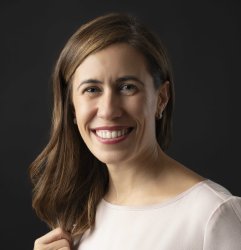
Professionnal title : Professor
PhD
Scientific fields : Agricultural Systems bioeconomy climate change policy water management
Main affiliation : Universidad Politécnica de Madrid
Av. Puerta de Hierro, nº 2 - 4 28040 Madrid
+34 91 067 09 14
Presentation
Irene Blanco Gutiérrez is an Associate Professor in the Department of Agricultural Economics at the Universidad Politécnica de Madrid (UPM) and a researcher at the Research Centre for the Management of Agricultural and Environmental Risks (CEIGRAM), Spain. She holds a PhD in Agricultural Engineering (UPM), with research stays at UC Davis, and MSc degrees in Agrifood Economics (University of Montpellier 1) and Agrifood Policies (CIHEAM Montpellier).She teaches Applied Microeconomics, Agricultural Policy and Rural Development, and Bioeconomy at UPM. She has also been an invited lecturer in France (CIHEAM Montpellier), Italy (CIHEAM Bari), Germany (Humboldt University), the UK (University of Leeds), the USA (UCLA), Colombia (Universidad de Santander), and the Dominican Republic (Universidad Autónoma de Santo Domingo).
Her research has been conducted across Europe, North Africa, and Latin America. She has led competitive research projects funded by the EU and the Spanish government, and collaborated with international organizations such as FAO and CEPAL, addressing issues related to water management, climate change, ecosystem conservation, and food security.
She serves as Associate Editor for Irrigation Science and the Spanish Journal of Agricultural Research, and as an expert evaluator for research and innovation programs including the EU Framework Programme, the Austrian Science Fund, the Polish National Science Centre, and the Spanish Ministry of Science and Innovation.
What I can bring to this network ?
Research and teaching experience in systems science applied to water and agriculture.Active involvement in research networks and collaboration with the European Engineering Learning Innovation and Science Alliance (EELISA), led by UPM, aimed at advancing a common model for European engineering education.
Publications and practical tools for systems analysis with real-world applications.
What I seek in this network ?
I seek opportunities for interdisciplinary collaboration, knowledge exchange, and joint research at both global and regional levels. I am particularly interested in learning from others’ policy-relevant experiences in tackling complex sustainability challenges, and in exploring how to translate these insights into education, through innovative training programs and academic partnerships that empower future decision-makers.Calibration and validation of APSIM–Maize, DSSAT CERES–Maize, and AquaCrop models for Ethiopian tropical environments
- This article compares the performance of three process-based crop models (APSIM–Maize, DSSAT CERES–Maize, and AquaCrop) under Ethiopian tropical conditions. Using field data from three agro-ecological sites and four maize varieties, the study conducts model calibration, validation, and ensemble analysis. The findings demonstrate that ensemble modeling significantly improves simulation accuracy and reduces uncertainty compared to individual models.
Methodology


Themes
AgricultureType de ressource
- Article
Licence
Non-Free licenceCapSha Use Case
Abebe Bezaiet Dessalegn
Professionnal title : Other
Researcher and Development Practitioner
Main affiliation : International Center for Agricultural Research in the Dry Areas (ICARDA)
2 Port Said, Victoria Sq, Ismail El-Shaaer Buildin 11742 Cairo
01066318487
Presentation
a Social Scientist with a solid academic background in International Development, International Relations and Public Policy; supported with over 20 years of work experience in a wide range of issues including - sustainable agricultural diversification and intensification, technology adaptation and large-scale adoption, water and land management including reuse of marginal water resources, climate change and resilience of livelihood systems, food security, community engagement and gender inclusion. She currently works with the International Center for Agricultural Research in the Dry Areas (ICARDA) and is based in Cairo, Egypt. Her work primarily focuses on linking agricultural research to development where she directly engages with farmers and national and international partners to promote the adoption and large-scale use of proven agricultural technologies and innovative practices. Her current and past projects at ICARDA span over several countries including Egypt, Iraq, Jordan, Lebanon, West Bank, Tunisia, Syria, Yemen, Pakistan, Kazakhstan, Nigeria, Ethiopia, and Burkina Faso.What I can bring to this network ?
My experience in implementing system-oriented projects on the ground.What I seek in this network ?
Opportunities to learn from others' experiences and to design system-based solutions/models that can be scientifically documented and replicated (after being contextualized).Descheemaeker Katrien
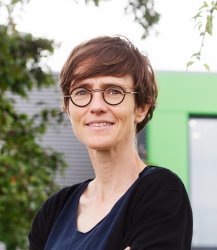
Professionnal title : Professor
Scientific fields : Crop Modeling Agricultural Systems Agronomy
Main affiliation : Wageningen University and Research
Presentation
Katrien Descheemaeker is Professor Plant Production Systems in the Plant Science Group of Wageningen University (Netherlands). Katrien's research focuses on farming systems analysis, soil-plant-animal interactions, sustainable development and resource use efficiency, with a special interest in the functioning and dynamics of mixed crop-livestock systems. Current activities combine experimental trial work with simulation modelling to identify and assess options for sustainable intensification and climate-smart agriculture. Across various projects on smallholder farming systems in sub-Saharan Africa, Dr. Descheemaeker designs participatory and co-learning approaches that aim to co-design tailored agricultural technologies and practices to improve farm productivity, food security, resilience to shocks, and natural resource integrity.What I can bring to this network ?
Experience with research and education in systems analysis of agricultural systems. Educational material; tools and methods for systems analysisWhat I seek in this network ?
Kleinermann Charles
Main affiliation : ICARDA
Secondary affiliation : CGIAR CapSha Accelerator
Presentation
What I can bring to this network ?
What I seek in this network ?
Lopez Ridaura Santiago
Professionnal title : Doctor
Scientific fields : Agricultural Systems Agronomy climate change
Main affiliation : CIMMYT
Secondary affiliation : INRA France
Presentation
Santiago Lopez-Ridaura: Mexican agronomist with more than 20 years of experience on the evaluation and design of more sustainable agricultural systems at different levels of analysis. With more than 60 scientific publications in a wide diversity of topics, his main area of expertise is around the sustainability of small-scale farming systems, ex-ante and ex-post multicriteria assessment, natural resource management, agroecology and food and nutritional security. He has led and participated in several projects worldwide related to the development and implementation of agricultural innovations and integrated farming systems research with a wide diversity of partners and students. He is currently a principal scientist in the Sustainable Agri-food Systems Program of CIMMYTWhat I can bring to this network ?
Expertise on methods and tools for systems analysis. Experiences in different contexts on the application of systems analysis methods and tools.What I seek in this network ?
Collaboration with other disciplinesWERY Jacques
Professionnal title : Professor
Scientific fields : Agricultural Systems Agronomy
Main affiliation : L'Institut Agro
3 rue de la Frégate 34080 Montpellier
+33671916585
Presentation
Jacques WERY is Emeritus Professor at l’Institut Agro (France). He has been teaching crop physiology, agronomy and agricultural systems during 37 years before moving to science and partnership management as Deputy Director General Research of ICARDA based in Cairo (2018-2021) and as Director of Science and Partnership at l’Institut Agro (2021-2024). He has been board member of the Seamless project on integrated modelling of agricultural systems (2004-2009) and Executive Secretary of the European Society for Agronomy (2010-2018).What I can bring to this network ?
My time and passion in the coordination of the CoPSyS and the System-S platform.What I seek in this network ?
Sharing capacities and building projects in an interdisciplinary framework.Case Study TIMENKAR
Descheemaeker Katrien
Professionnal title : Professor
Scientific fields : Crop Modeling Agricultural Systems Agronomy
Main affiliation : Wageningen University and Research
Presentation
Katrien Descheemaeker is Professor Plant Production Systems in the Plant Science Group of Wageningen University (Netherlands). Katrien's research focuses on farming systems analysis, soil-plant-animal interactions, sustainable development and resource use efficiency, with a special interest in the functioning and dynamics of mixed crop-livestock systems. Current activities combine experimental trial work with simulation modelling to identify and assess options for sustainable intensification and climate-smart agriculture. Across various projects on smallholder farming systems in sub-Saharan Africa, Dr. Descheemaeker designs participatory and co-learning approaches that aim to co-design tailored agricultural technologies and practices to improve farm productivity, food security, resilience to shocks, and natural resource integrity.What I can bring to this network ?
Experience with research and education in systems analysis of agricultural systems. Educational material; tools and methods for systems analysisWhat I seek in this network ?
GERARD Bruno
Professionnal title : Professor
Dean, College of Agriculture and Environmental Sciences
Main affiliation : University Mohammed VI Polytechnic
ALOUIDANE 30700 Marrakech
+212662827646
Presentation
With over 30 years of work experience in the field of agriculture and environmental sciences, I am currently the Dean of the College of Agriculture and Environmental Sciences at UM6P - Mohammed VI Polytechnic University. In this role, I oversee the academic, research, and outreach activities of the college, and foster collaboration and innovation among faculty, students, and partners. Prior to joining UM6P, I was the Director of the Sustainable Intensification Program at CIMMYT, where I managed a global team of researchers and practitioners working on improving the productivity and profitability of smallholder farmers. I have a PhD in Agronomy from Universität Hohenheim and a MSc in Irrigation Engineering from Utah State University and Agricultural Engineering degree from Université catholique de Louvain. My core competencies include strategic leadership, interdisciplinary collaboration, project management, and stakeholder engagement. My mission is to advance the knowledge and practice in agriculture and environmental sustainability, and to contribute to the social and economic development of the communities I serve. I value diversity, innovation, and excellence, and I strive to bring these values to my work and my team.What I can bring to this network ?
Experience, network, and passionWhat I seek in this network ?
Novel thinking for research and educationLopez Ridaura Santiago
Professionnal title : Doctor
Scientific fields : Agricultural Systems Agronomy climate change
Main affiliation : CIMMYT
Secondary affiliation : INRA France
Presentation
Santiago Lopez-Ridaura: Mexican agronomist with more than 20 years of experience on the evaluation and design of more sustainable agricultural systems at different levels of analysis. With more than 60 scientific publications in a wide diversity of topics, his main area of expertise is around the sustainability of small-scale farming systems, ex-ante and ex-post multicriteria assessment, natural resource management, agroecology and food and nutritional security. He has led and participated in several projects worldwide related to the development and implementation of agricultural innovations and integrated farming systems research with a wide diversity of partners and students. He is currently a principal scientist in the Sustainable Agri-food Systems Program of CIMMYTWhat I can bring to this network ?
Expertise on methods and tools for systems analysis. Experiences in different contexts on the application of systems analysis methods and tools.What I seek in this network ?
Collaboration with other disciplinesMcDonald Andrew
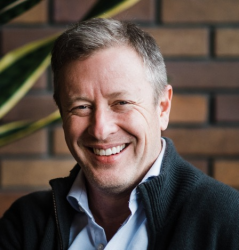
Professionnal title : Professor
Main affiliation : Cornell University
1114 Bradfield Hall, Cornell University 14853 Ithaca, NY
Presentation
Associate Professor of global cropping systems at Cornell University. 15+ years experience leading interdisciplinary teams conducting mission-driven research, principally in South Asia.What I can bring to this network ?
Development analogues from South Asia, mixed methods research approaches, agronomy fundamentals drawing on process-based understanding of system dynamicsWhat I seek in this network ?
New ways to conceptualize and operationalize the role of science towards accelerating sustainabiltiy transitions; collaborations for curricula, methods, and capacity development.WERY Jacques
Professionnal title : Professor
Scientific fields : Agricultural Systems Agronomy
Main affiliation : L'Institut Agro
3 rue de la Frégate 34080 Montpellier
+33671916585
Presentation
Jacques WERY is Emeritus Professor at l’Institut Agro (France). He has been teaching crop physiology, agronomy and agricultural systems during 37 years before moving to science and partnership management as Deputy Director General Research of ICARDA based in Cairo (2018-2021) and as Director of Science and Partnership at l’Institut Agro (2021-2024). He has been board member of the Seamless project on integrated modelling of agricultural systems (2004-2009) and Executive Secretary of the European Society for Agronomy (2010-2018).What I can bring to this network ?
My time and passion in the coordination of the CoPSyS and the System-S platform.What I seek in this network ?
Sharing capacities and building projects in an interdisciplinary framework.Case study to advocate for systeme science in agricultural faculties
It clearly shows that there is a gap between the logic of research and development and the logic of farmers in 3 subsaharan africa public and private extension programmes.
Methodology
Themes
Agriculture FoodCase study
Type de ressource
- Article
Licence
Public DomainChimonyo Vimbayi Grace Petrova
Professionnal title : Other
Main affiliation : CIMMYT
Secondary affiliation : University of KwaZulu Natal
Presentation
My expertise are in integrating practices to foster food and nutrition security while addressing climate change and rural development challenges. I actively engage in participatory action research methodologies to empower smallholder farmers and promote sustainable agricultural practices. I utilize various tools, including crop simulation modeling, alongside community-driven approaches to adapt to climate variability and enhance food security outcomes. My work looks at the intricate relationships within the Climate-Food-People-Environment within agricultural landscapes. Committed to transformative strategies, I advocate for inclusive food security initiatives that prioritize equity and resilience in agricultural systems.What I can bring to this network ?
Human-centred approach to systems scienceCo-PRODSCOPE
COPRODSCOPE is a tool designed for agricultural advisors that aims to help agropastoralists in the savannah areas of sub-Saharan Africa to enhance the value of their crop (straw, haulm, stalks) and livestock (solid manure) by-products. It is an assessment and advisory tool for the management of by-products in order to optimize resource use and promote agroecological intensification of agropastoral farms.
Methodology
Themes
Agriculture OthersCase study
Type de ressource
- Website Resource
Licence
Public DomainCointault Frédéric
Professionnal title : Professor
Main affiliation : L'Institut Agro Dijon
26 Bd Dr Petitjean 21000 Dijon
Presentation
I am a full professor at L'Institut Agro Dijon, teaching also in PolyTech Dijon at the University of Burgundy Europe, in Biosystem Engineering, with skills in metrology, sensors, data acquisition and processing, image and signal processing. I am doing my research at ImViA laboratory (Imaging and Artificial Vision) on different subjects dealing with crop disease detection (especially in vineyard), plant phenotyping (aerial and root) in-field or in dedicated platforms, and spraying optimization, using data fusion, AI and Computer Vision.What I can bring to this network ?
Maybe I can bring new skills in Computer Vision and new contacts with some african countries. I can also bring my dynamism.What I seek in this network ?
I am searching new collaborations with abroad colleagues on the use of Computer Vision for agriculture, environment and agrifood projects. I would develop my network to propose international collaborations on subjects including all the domains of agriculture.Contrast between farmers logic and agricultural extension provider’s logic: Case studies in Burkina Faso, Mali and Benin
CopSyS
abdelradi fadi
Professionnal title : Professor
Main affiliation : Faculty of Agriculture – Cairo University.
3 gamma st 12613 giza
+201022661239
Presentation
Dr Fadi Abdelradi research focus lies within the field of agricultural value chain analysis, with a special emphasis on price volatility transmission across markets and production efficiency. Recently, Fadi completed two projects: (1) a two-year project called “Improving the fresh produce supply chain network in Egypt” financed by the American University in Cairo (AUC); , (2) a four-year project, financed by PRIMA called "Sustainable Innovation and Governance in the Mediterranean Area for the Water-Ecosystem-Food Nexus". Presently, Dr Fadi Abdelradi is working with a new four-year project, financed by PRIMA called “Operational Adaptation Nexus-Based Systems Solutions in Mediterranean”.Fadi is an associate editor in the Egyptian Journal of Agricultural Sciences and a reviewer for several international journals like Waste Management, Energy Economics, Agricultural Economics, Water Resources Management, International Review of Economics and Finance, Energy Sources, Part B Economics, Planning, and Policy, International Journal of Applied Management Theory and Research, Plos one, Plos one - Climate.
What I can bring to this network ?
Bring experience about farming systems in Egypt- investment options opportunities
- existing farming practices
- outreach to local partners
What I seek in this network ?
- expand my network- participate in events
- join research projects
Abebe Bezaiet Dessalegn
Professionnal title : Other
Researcher and Development Practitioner
Main affiliation : International Center for Agricultural Research in the Dry Areas (ICARDA)
2 Port Said, Victoria Sq, Ismail El-Shaaer Buildin 11742 Cairo
01066318487
Presentation
a Social Scientist with a solid academic background in International Development, International Relations and Public Policy; supported with over 20 years of work experience in a wide range of issues including - sustainable agricultural diversification and intensification, technology adaptation and large-scale adoption, water and land management including reuse of marginal water resources, climate change and resilience of livelihood systems, food security, community engagement and gender inclusion. She currently works with the International Center for Agricultural Research in the Dry Areas (ICARDA) and is based in Cairo, Egypt. Her work primarily focuses on linking agricultural research to development where she directly engages with farmers and national and international partners to promote the adoption and large-scale use of proven agricultural technologies and innovative practices. Her current and past projects at ICARDA span over several countries including Egypt, Iraq, Jordan, Lebanon, West Bank, Tunisia, Syria, Yemen, Pakistan, Kazakhstan, Nigeria, Ethiopia, and Burkina Faso.What I can bring to this network ?
My experience in implementing system-oriented projects on the ground.What I seek in this network ?
Opportunities to learn from others' experiences and to design system-based solutions/models that can be scientifically documented and replicated (after being contextualized).ASSOGBA S. Claude-Gervais
Professionnal title : Professor
Main affiliation : Laboratoire de Recherche sur l'Innovation pour le Développement Agricole / Faculty of Agronomy / University de Parakou
BP1669 000 229 Parakou
0161104886
Presentation
Claude-Gervais ASSOGBA is an Associate Professor in Agro-Socio-Anthropology. He is a lecturer at the Department of Rural Economics and Sociology at the Faculty of Agronomy, University of Parakou in Republic of Benin, West Africa. He obtained his PhD in Agricultural Extension and Rural Sociology at the University of Liege in Belgium in 2014. He heads the Research Unit "Sustainable Production Systems" of the Laboratory Research on Innovation for Agricultural Development (LRIDA) at the University of Parakou. He is the Scientific Secretary of the doctorate training on Sociology of Natural Resources at the Doctorate School of Agricultural and Water Sciences (EDSAE). His researches focus on knowledge and innovations process management, adoption of sustainable agricultural practices (agroecology and organic agriculture). He has an expertise in strategic plan conception, facilitation of innovation platform process and is actively involved in many initiatives promoting agroecology and organic agriculture in Benin and Africa.What I can bring to this network ?
My experiences and expertises in multidisciplinary reaserches conception and implementationWhat I seek in this network ?
Develop partnerships and collaborations for the design and implementation of joint projects relating to sustainable production systems, food systems and climate changeBaudron Frédéric
Professionnal title : Doctor
Main affiliation : CIRAD
TA B 115/02 - Avenue Agropolis - Montpellier cedex
+33 (0) 4 67 61 71 67
Presentation
Frédéric Baudron is a Senior Scientist working for the French Agricultural Research Centre for International Development (Cirad), based in Montpellier, France. Prior to this, he was a Principal Scientist working for the International Maize and Wheat Improvement Center (CIMMYT) based first in Addis Ababa, Ethiopia (from 2011 to 2016) and later in Harare, Zimbabwe (from 2016 to 2023).Trained as a tropical agronomist in France, he specialized as a livestock scientist and started his career with a focus on the interface between people (mainly farmers) and wildlife in Zimbabwe (and neighbouring countries). He then carried his PhD on plant production systems at the University of Wageningen (The Netherlands).
He has been involved in a number of research projects in Congo, Ethiopia, Kenya, Rwanda, Tanzania, Zambia, Malawi and Zimbabwe. He has more than 23 years of experience developing solutions with and for smallholders in sub-Saharan Africa.
What I can bring to this network ?
Expertise, network of projectsWhat I seek in this network ?
Collaboration, discussions around methods, new partnershipBebeley Jenneh Fatima
Professionnal title : Doctor
Main affiliation : Ernest Bai Koroma University of Science and Technology, Magburaka, Southern Province, Sierra Leone.
Ernest Bai Koroma University of Science and Techno Makeni
+232 75836933
Presentation
I have extensive experience spanning over 10 years in agronomy, crop science, and farmer participatory evaluation of improved crop production technologies.What I can bring to this network ?
To share knowledge and results obtained in crop modelling research in West Africa and contribute to the system science in agriculture for sustainable resource use, climate adaptation, and food security.What I seek in this network ?
To collaborate and network with other researchers to ensure that system science in agriculture and education is integrated into our university systems in Sierra Leone.Belhouchette Hatem
Professionnal title : Professor
Researcher
Main affiliation : CIHEAM Montpellier
3191 route de Mende 34090 Montpellier
0619282623
Presentation
Hatem Belhouchette started his study Crop Production System at the National Institute of Agronomy-Tunisia in 1991. In 1995 Hatem graduated with a major in Crop production System and minors in Farm Economics. From 1996 to 1999 he realized, on irrigation cropping system in Mediterranean regions, a Master of Science in IAM-Bari.In 2000 he started his PhD study on Cropping System sustainability by using bio-economic approach associated to GIS system in Northern Tunisia. In 2004 he received his PhD.
Since 2003, he has been appointed at IAM-Montpellier institute as a lecturer and researcher in Agricultural Production Systems. His main expertise and interest is the development of operational methods for the assessment, exploration and design of agricultural production systems, both at field and farm levels. He is presently coordinating research network that aims at the development of a system for agro-economic and environmental modeling.He ran several national and international research projects, and supervises several Master and PhDs projects mainly on farming resilience analysis under climate change and market uncertainty topics.
What I can bring to this network ?
Methods and assumptions for working at the interface between different disciplines to design resilient agricultural systems.What I seek in this network ?
understand and learn how to better work at the interface between different disciplines to design performant systems.Blanco-Gutiérrez Irene
Professionnal title : Professor
PhD
Scientific fields : Agricultural Systems bioeconomy climate change policy water management
Main affiliation : Universidad Politécnica de Madrid
Av. Puerta de Hierro, nº 2 - 4 28040 Madrid
+34 91 067 09 14
Presentation
Irene Blanco Gutiérrez is an Associate Professor in the Department of Agricultural Economics at the Universidad Politécnica de Madrid (UPM) and a researcher at the Research Centre for the Management of Agricultural and Environmental Risks (CEIGRAM), Spain. She holds a PhD in Agricultural Engineering (UPM), with research stays at UC Davis, and MSc degrees in Agrifood Economics (University of Montpellier 1) and Agrifood Policies (CIHEAM Montpellier).She teaches Applied Microeconomics, Agricultural Policy and Rural Development, and Bioeconomy at UPM. She has also been an invited lecturer in France (CIHEAM Montpellier), Italy (CIHEAM Bari), Germany (Humboldt University), the UK (University of Leeds), the USA (UCLA), Colombia (Universidad de Santander), and the Dominican Republic (Universidad Autónoma de Santo Domingo).
Her research has been conducted across Europe, North Africa, and Latin America. She has led competitive research projects funded by the EU and the Spanish government, and collaborated with international organizations such as FAO and CEPAL, addressing issues related to water management, climate change, ecosystem conservation, and food security.
She serves as Associate Editor for Irrigation Science and the Spanish Journal of Agricultural Research, and as an expert evaluator for research and innovation programs including the EU Framework Programme, the Austrian Science Fund, the Polish National Science Centre, and the Spanish Ministry of Science and Innovation.
What I can bring to this network ?
Research and teaching experience in systems science applied to water and agriculture.Active involvement in research networks and collaboration with the European Engineering Learning Innovation and Science Alliance (EELISA), led by UPM, aimed at advancing a common model for European engineering education.
Publications and practical tools for systems analysis with real-world applications.
What I seek in this network ?
I seek opportunities for interdisciplinary collaboration, knowledge exchange, and joint research at both global and regional levels. I am particularly interested in learning from others’ policy-relevant experiences in tackling complex sustainability challenges, and in exploring how to translate these insights into education, through innovative training programs and academic partnerships that empower future decision-makers.Chimonyo Vimbayi Grace Petrova
Professionnal title : Other
Main affiliation : CIMMYT
Secondary affiliation : University of KwaZulu Natal
Presentation
My expertise are in integrating practices to foster food and nutrition security while addressing climate change and rural development challenges. I actively engage in participatory action research methodologies to empower smallholder farmers and promote sustainable agricultural practices. I utilize various tools, including crop simulation modeling, alongside community-driven approaches to adapt to climate variability and enhance food security outcomes. My work looks at the intricate relationships within the Climate-Food-People-Environment within agricultural landscapes. Committed to transformative strategies, I advocate for inclusive food security initiatives that prioritize equity and resilience in agricultural systems.What I can bring to this network ?
Human-centred approach to systems scienceCointault Frédéric
Professionnal title : Professor
Main affiliation : L'Institut Agro Dijon
26 Bd Dr Petitjean 21000 Dijon
Presentation
I am a full professor at L'Institut Agro Dijon, teaching also in PolyTech Dijon at the University of Burgundy Europe, in Biosystem Engineering, with skills in metrology, sensors, data acquisition and processing, image and signal processing. I am doing my research at ImViA laboratory (Imaging and Artificial Vision) on different subjects dealing with crop disease detection (especially in vineyard), plant phenotyping (aerial and root) in-field or in dedicated platforms, and spraying optimization, using data fusion, AI and Computer Vision.What I can bring to this network ?
Maybe I can bring new skills in Computer Vision and new contacts with some african countries. I can also bring my dynamism.What I seek in this network ?
I am searching new collaborations with abroad colleagues on the use of Computer Vision for agriculture, environment and agrifood projects. I would develop my network to propose international collaborations on subjects including all the domains of agriculture.Descheemaeker Katrien
Professionnal title : Professor
Scientific fields : Crop Modeling Agricultural Systems Agronomy
Main affiliation : Wageningen University and Research
Presentation
Katrien Descheemaeker is Professor Plant Production Systems in the Plant Science Group of Wageningen University (Netherlands). Katrien's research focuses on farming systems analysis, soil-plant-animal interactions, sustainable development and resource use efficiency, with a special interest in the functioning and dynamics of mixed crop-livestock systems. Current activities combine experimental trial work with simulation modelling to identify and assess options for sustainable intensification and climate-smart agriculture. Across various projects on smallholder farming systems in sub-Saharan Africa, Dr. Descheemaeker designs participatory and co-learning approaches that aim to co-design tailored agricultural technologies and practices to improve farm productivity, food security, resilience to shocks, and natural resource integrity.What I can bring to this network ?
Experience with research and education in systems analysis of agricultural systems. Educational material; tools and methods for systems analysisWhat I seek in this network ?
Devkota Wasti Mina
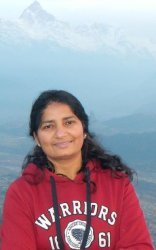
Professionnal title : Doctor
Scientific fields : Agricultural Systems Agronomy
Main affiliation : International Center for Agriculture Research in the Dry Areas (ICARDA)
20 Rue Jabal Oukaimeden, Agdal, Rabat +212 Agdal
0662147864
What I can bring to this network ?
I can share regional experience on cropping systems, particularly from South Asia, Central Asia, and the MENA region. These regions encompass a wide range of agro-ecological zones, farming practices, and socio-economic contexts, which provide valuable insights into the design and adaptation of cropping systems.What I seek in this network ?
I seek to be an active and engaged member of the Cropping Systems Network, contributing to community of practice. I aim to both share insights from my regional and field experience and learn from the diverse perspectives and innovations of other members. I am particularly interested in supporting the advancement of integrated systems science—bringing together agronomy, ecology, socioeconomics, and policy—to inform and strengthen key research and development agendas. By working collaboratively, I hope to contribute to the co-creation of knowledge and solutions that address the complex challenges facing cropping systems across different agro-ecological and socio-economic contexts."El Graoui Marwa
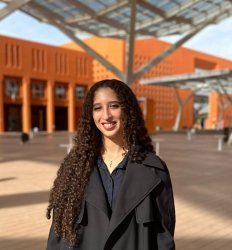
Professionnal title : PhD candidate
Main affiliation : Mohammed VI Polytechnic University
Presentation
Last year PhD student at the College of Agriculture and Environmental Sciences at UM6P - Mohammed VI Polytechnic University, and upcoming Post-doctoral researcher at Cornell University - Atkinson center.What I can bring to this network ?
Passion and engagement - geospatial methods development - experience in biodiversity and genetic resources conservation.What I seek in this network ?
Multidisciplinary frameworks - learning more about systems dynamics and their design - expanding my network.Feleke Hirut Getachew
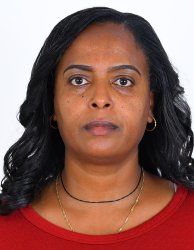
Assistant Professor
Scientific fields : Crop Modeling Agrometeorology Food Systems climate change
Main affiliation : Ambo University, Ambo Ethiopia
Secondary affiliation : Hawassa University, Hawassa, Ethiopia
Presentation
I am an agronomist, agrometeorologist, and crop modeller with a focus on the impacts of climate change on food security. Currently, I am working as a postdoctoral researcher, exploring how climate shifts affect agricultural systems and food availability. I am passionate about using interdisciplinary approaches to tackle complex challenges in agriculture and working towards sustainable solutions. I look forward to engaging with the community of practice at this workshop, where we can collaborate, share knowledge, and develop innovative strategies for resilient, sustainable agri-food futures.What I can bring to this network ?
Given my background as an agronomist, agrometeorologist, and crop modeller, I bring a strong understanding of how climate change impacts agricultural systems and food security. My interdisciplinary approach allows me to bridge the gap between science, policy, and practical solutions. I am eager to contribute my research and insights into sustainable agricultural practices, while also learning from and collaborating with others in this network. Together, we can work towards creating resilient and sustainable agri-food systems, especially in regions facing climate-related challenges.What I seek in this network ?
In this network, I seek to expand my understanding of global and regional challenges in agriculture, land, and water systems, particularly in the context of climate change. I am eager to collaborate with fellow experts from diverse disciplines to develop innovative, sustainable solutions for food security. Additionally, I hope to engage in capacity-building efforts and exchange knowledge that can be applied in both research and practical settings, especially in Africa and Mediterranean regions where these challenges are most pressing.Frija Aymen
Main affiliation : ICARDA
At INRAT, Av. Hedi Karray Ariana, Tunisia Tunis
GERARD Bruno
Professionnal title : Professor
Dean, College of Agriculture and Environmental Sciences
Main affiliation : University Mohammed VI Polytechnic
ALOUIDANE 30700 Marrakech
+212662827646
Presentation
With over 30 years of work experience in the field of agriculture and environmental sciences, I am currently the Dean of the College of Agriculture and Environmental Sciences at UM6P - Mohammed VI Polytechnic University. In this role, I oversee the academic, research, and outreach activities of the college, and foster collaboration and innovation among faculty, students, and partners. Prior to joining UM6P, I was the Director of the Sustainable Intensification Program at CIMMYT, where I managed a global team of researchers and practitioners working on improving the productivity and profitability of smallholder farmers. I have a PhD in Agronomy from Universität Hohenheim and a MSc in Irrigation Engineering from Utah State University and Agricultural Engineering degree from Université catholique de Louvain. My core competencies include strategic leadership, interdisciplinary collaboration, project management, and stakeholder engagement. My mission is to advance the knowledge and practice in agriculture and environmental sustainability, and to contribute to the social and economic development of the communities I serve. I value diversity, innovation, and excellence, and I strive to bring these values to my work and my team.What I can bring to this network ?
Experience, network, and passionWhat I seek in this network ?
Novel thinking for research and educationHamzat Azeez Adewale
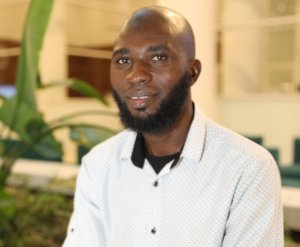
Main affiliation : Mohammed VI Polytechnic University (UM6P)
UM6P 43150 Benguerir
212672044090
What I can bring to this network ?
Collective IntelligenceHanke-Louw Nora
Scientific fields : capacity sharing project management
Main affiliation : International Water Management Institute (IWMI)
Secondary affiliation : CGIAR
What I can bring to this network ?
Attending to explore and present further South-South networks and publications.What I seek in this network ?
Listening and networkingJacobson Michael
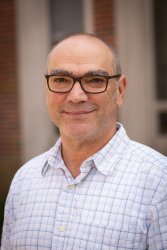
Professionnal title : Professor
Main affiliation : Penn State
Secondary affiliation : UM6P
309 Forest Resources Bldg 16802 University Park
+1 8144044920
Presentation
Dr. Michael Jacobson is a professor of forest resources at Penn State and an affiliate professor at UM6P. Throughout his over 30+ year career which includes work at the World Bank and Peace Corps, he has integrated extension, teaching and research to promote sustainable land use with interdisciplinary approaches bridging social and biophysical sciences. Major topics of interest include agroforestry, bioenergy, forest finance and economics and water-energy-food nexus. He teaches forest economics, global agricultural systems, agroforestry, and international forestry. He has significant presence in international activities, in dozens of countries but mainly focused on Africa. He is currently leading two international projects funded by the Belmont Forum and the National Science Foundation on drought/disaster risk and resilience indicators and water-energy-food nexus.What I can bring to this network ?
Thinking about economic tradeoffs in resource management decisions.What I seek in this network ?
First time I've participated with this group so need to listen and learn.JEUFFROY Marie-Hélène
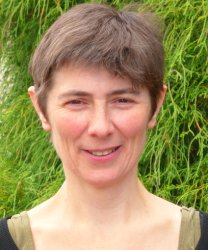
Professionnal title : Doctor
Scientific fields : System Agronomy
Main affiliation : INRAE
Secondary affiliation : IDEAS
1 place de l'agronomie 91120 PALAISEAU
33 6 83 70 24 27
Presentation
I am an agronomist, working on innovation in the cropping systems for the transition of the agrifood systems. I contributed to develop several methods to work on cropping systems analysis and design, particularly in real situations. I am currently the pilot of the national french network IDEAS (Initiative for the Design in Agrifood systems).What I can bring to this network ?
Methods, thinking, approaches, discussion, papers, controversies on system approach, from field, to agrifood system.What I seek in this network ?
scientific exchanges on system approach and developping this approach through sharing capacity buildingKleftodimos Georgios
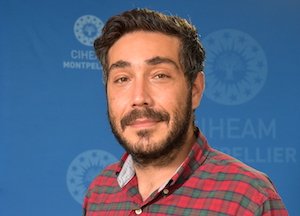
Professionnal title : Professor
Main affiliation : Mediterranean Agronomic Institute of Montpellier (CIHEAM-IAMM)
Secondary affiliation : Montpellier Interdisciplinary center on Sustainable Agri-food systems (social and nutritional sciences) - MOISA
3191 route de Mende 34093 MONTPELLIER
+33659549621
Presentation
Georgios Kleftodimos is an Associate Professor in Environmental and Agricultural Economics at CIHEAM Montpellier. His research focuses on integrating ecological complexity into economic and systems models to support agroecological transitions, farming systems sustainability, and resilient food systems. He specializes in the economic valuation of ecosystem services and leads work on the socio-economic impacts of biodiversity loss and environmental degradation. A core dimension of his work addresses the Water-Energy-Food-Ecosystems (WEFE) Nexus in the Mediterranean, promoting integrated governance and adaptive strategies to enhance resource-use efficiency and climate resilience. Through transdisciplinary approaches and stakeholder engagement, he explores how economic instruments, policy incentives, and systems thinking can align food production with environmental sustainability in resource-constrained regions.What I can bring to this network ?
I bring to this network a unique combination of environmental economics expertise and systems modeling experience, grounded in real-world applications across Mediterranean agricultural systems. My work connects ecological complexity with socio-economic realities, using tools such as bio-economic modeling, ecosystem service valuation, and WEFE Nexus frameworks to assess trade-offs and guide policy. I also contribute strong experience in transdisciplinary research coordination (e.g., DIONYSUS, RESTPOLL), participatory approaches, and capacity-building. I am eager to foster economic-policy integration within systems science and help co-design solutions that are scientifically robust, context-sensitive, and policy-relevant.What I seek in this network ?
I seek to collaborate with a diverse community of scientists committed to rethinking agricultural and environmental sustainability through a systems lens.Kleinermann Charles
Main affiliation : ICARDA
Secondary affiliation : CGIAR CapSha Accelerator
Presentation
What I can bring to this network ?
What I seek in this network ?
Kumar Shalander
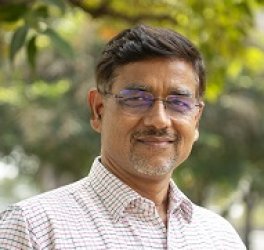
Professionnal title : Professor
Deputy Global Research Program Director: Enabling Systems Transformation
Main affiliation : International Crops Research Institute for the Semi-Arid Tropics
shalander.kumar@icrisat.org 500075 Hyderabad
9989807521
Presentation
Dr Shalander Kumar leads the Markets, Institutions, and Policies cluster and is Deputy Global Research Program Director of the Enabling Systems Transformation Program at ICRISAT, Hyderabad. Dr Kumar has over three decades of experience working in Asia and Sub-Saharan Africa. Current focus of his work is on data driven systems approaches for scaling climate smart and nutrition sensitive agricultural value chains and food systems; tools and frameworks for co-designing holistic solutions for resilient farm and food systems; and food and development policy analysis around transformation, seed systems, agri-business opportunities, climate adaptation and mainstreaming millets.What I can bring to this network ?
Systems analysis, multicriteria and bioeconomic modelling for evaluating and co-designing systemic solutions bundles for systems transformationWhat I seek in this network ?
• Global networking to strengthen knowledge on systems science• Collaborative efforts on mainstreaming system science for addressing the wicked challenges of smallholder agri-food systems
Lamlili Nadia
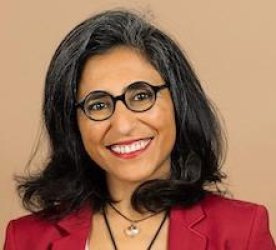
Professionnal title : PhD candidate
Main affiliation : UM6P France
Presentation
Author and former journalist, I currently serve as Head of Social Innovation at UM6P France. I am pursuing a PhD in Development and Environmental Economics at Paris-Saclay University, within the framework of an action-research project to be conducted in Morocco. My doctoral research focuses on the intersection of gender dynamics and climate change adaptation in agricultural value chains in Africa.In parallel, I am a member of the scientific committee and responsible for the organization of the Autumn School "Socio-Economic Strategies for Sustainable Development in Rural Africa." This event, jointly organized by the Graduate School of Economics & Management at the University of Paris-Saclay (along with its research units UMI-SOURCE and UMR PSAE) and Mohammed VI Polytechnic University (including its College of Agriculture and Environmental Sciences and its Social Innovation Institute) with the support of « Agence Universitaire de la Francophone (AUF) » et OCP Foundation, will take place from October 27 to 31, 2025, at the Benguerir campus in Morocco. This Autumn School is a hands-on school, there will be an immersive work on real african case studies, fostering an interdisciplinary platform of exchange between researchers, PhD students, and professionals to stimulate innovation and strengthen the resilience of rural African territories.
I hold a Master’s degree in Geopolitics and Geo-economics of Emerging Africa, jointly awarded in 2023 by HEC Paris and Mohammed VI Polytechnic University (UM6P). My master’s thesis explored the impact of agricultural training programs on women’s empowerment in West Africa, through a case study of an initiative launched by OCP Africa in Senegal to train women in agricultural processing and marketing. The program was evaluated using the Women’s Empowerment in Agriculture Index for Market Inclusion (Pro-WEAI+MI), developed by the International Food Policy Research Institute (IFPRI), the U.S. Agency for International Development (USAID), and the Oxford Poverty and Human Development Initiative (OPHI).
Between 1997 and 2018, I held several senior editorial positions in the media sector in Morocco and France, most notably as Head of the Maghreb–Middle East section at Jeune Afrique magazine. In 2019, I published the novel "Une plume dans la plaie", which explores the challenges faced by a Moroccan newspaper under state censorship.
From 2020 to 2025, I served as Editorial Director of the think tank L’Afrique des Idées, which produces analyses and policy recommendations on major economic, political, and cultural issues affecting the African continent.
What I can bring to this network ?
As a researcher and practitioner at the intersection of development economics, gender studies, and climate resilience, I bring a cross-disciplinary perspective grounded in both field-based action-research and policy-oriented analysis. My current doctoral research explores gender dynamics and climate adaptation within agricultural value chains in Africa, with a particular focus on action-research in Morocco.In addition, as a member of the scientific committee of the Automn PHD School "Socio-Economic Strategies for Sustainable Development in Rural Africa.", I can bring a transdiciplinary knowledge based on real case studies in Africa, especially in contexts marked by socio-environmental complexity. I also bring strong communication skills, honed through a long career in journalism and authorship, which allow me to effectively translate scientific insights into accessible narratives for decision-makers and local communities.
What I seek in this network ?
This community of practice represents an opportunity to deepen my understanding of systems science tools and models and to engage in meaningful collaboration with researchers, practitioners, and system thinkers working on the complex interconnections between agriculture, gender, water governance and indigenous knowledge.Lopez Ridaura Santiago
Professionnal title : Doctor
Scientific fields : Agricultural Systems Agronomy climate change
Main affiliation : CIMMYT
Secondary affiliation : INRA France
Presentation
Santiago Lopez-Ridaura: Mexican agronomist with more than 20 years of experience on the evaluation and design of more sustainable agricultural systems at different levels of analysis. With more than 60 scientific publications in a wide diversity of topics, his main area of expertise is around the sustainability of small-scale farming systems, ex-ante and ex-post multicriteria assessment, natural resource management, agroecology and food and nutritional security. He has led and participated in several projects worldwide related to the development and implementation of agricultural innovations and integrated farming systems research with a wide diversity of partners and students. He is currently a principal scientist in the Sustainable Agri-food Systems Program of CIMMYTWhat I can bring to this network ?
Expertise on methods and tools for systems analysis. Experiences in different contexts on the application of systems analysis methods and tools.What I seek in this network ?
Collaboration with other disciplinesMacCarthy Dilys
Professionnal title : Professor
Scientific fields : Agricultural Systems
Main affiliation : University of Ghana
+233 244090502
Mati Bancy
Professionnal title : Professor
Water Management
Main affiliation : Professor at Jomo Kenyatta University of Agriculture and Technology, Kenya
Secondary affiliation : Convenor of SRI-Africa
Jomo Kenyatta University of Agric & Technology 00200 Nairobi
+254736353389
Presentation
Land and Water Management expert & Professor at JKUATWhat I can bring to this network ?
A lifetime of experiences in research, capacity building, project implementation and networking, while working with diverse stakeholders to improve land and water management in AfricaWhat I seek in this network ?
Link up with others in all disciplines so that as a collective, we enable Systems science to work for African agricultural systemsMazhoud Houda
Professionnal title : Professor
activist
Main affiliation : Research at INRAT
Secondary affiliation : VCA member
Rue Hedi Karray 1004 El Menzeh
+21622461628
McDonald Andrew
Professionnal title : Professor
Main affiliation : Cornell University
1114 Bradfield Hall, Cornell University 14853 Ithaca, NY
Presentation
Associate Professor of global cropping systems at Cornell University. 15+ years experience leading interdisciplinary teams conducting mission-driven research, principally in South Asia.What I can bring to this network ?
Development analogues from South Asia, mixed methods research approaches, agronomy fundamentals drawing on process-based understanding of system dynamicsWhat I seek in this network ?
New ways to conceptualize and operationalize the role of science towards accelerating sustainabiltiy transitions; collaborations for curricula, methods, and capacity development.Okori Patrick
Main affiliation : Regional Universities FORUM for capacity Building in Agriculture (RUFORUM)
151, Garden Hill Road Makerere University, 16811 Kampala
+256772683623
Presentation
Prof Patrick Okori an Agriculture Scientist and Education Leader is the Executive Secretary of RUFORUM (www.ruforum.org). He has previously served as Academic Dean and Science Leader at Makerere University in Uganda, Africa, responsible for academic reform, partnerships and resourcing. At the CGIAR, (ICRISAT), he was Principal Scientist- Groundnut Breeding, Country Representative, and Deputy Director of Research Programme on Accelerated Crop Improvement. He is a thought leader serving in national to global high-level strategy and visioning processes.What I can bring to this network ?
Vast experience in University led Graduate training and Human capital development for science and development mostly within Agriculture and allied sectors of the economyWhat I seek in this network ?
To engage with the CGIAR on cost-leveraged opportunities for capacity building and sharing in agriculture and related disciplines. My interest is who best we could work together to training the nest generation of science leaders (MSc PhD and post doctoral fellows, as well as specialised skilling in emerging science areas.Rizzo Davide
Professionnal title : Researcher
Scientific fields : Agronomy System Agronomy
Main affiliation : LISAH, IRD
2 place Pierre Viala, bât. 24, LISAH 34060 Montpellier
Presentation
My experience in agronomic research spans about two decades, focusing primarily on the study of decision-making processes and landscape agronomy.What I can bring to this network ?
I can bring to this network some reflexivity and a landscape perspective on agricultural system dynamicsWhat I seek in this network ?
I seek to learn more about existing approaches, especially towards transdisciplinaritySidibé Amadou
Professionnal title : Doctor
Main affiliation : Rural Polytechnic Institute for Training and Applied Research IPR-IFRA, Mali
Secondary affiliation : Beta Gamma Center for Research and Development
Kabala face campus universitaire 224C/8 côté BDM BP06 Bamako
+22376120945
Presentation
Amadou Sidibé is an associate professor and head of the research laboratory on social and economic dynamics under the department of economic and social sciences at the Rural Polytechnic Institute for Training and Applied Research (IPR-IFRA) in Katibougou, Mali. He holds a PhD in Agro-Socio-Economics from Wageningen University in the Netherlands. He is co-founder and director of the Beta Gamma Center for Research and Development, dedicated to research issues that transcend disciplinary barriers. His teaching and research areas focus on the analysis of value chains, food systems, the sustainability of agro-socio-ecological systems, innovation processes and technology studies.What I can bring to this network ?
I can bring to this network my experience in interdisciplinary and transdisciplinary research.What I seek in this network ?
In this network, I am open to learning, networking and co-creation.Snoussi Hager
Main affiliation : National Institute of Agricultural Research of Tunisia-INRAT
Rue Hedi Karray 1004 Tunis
Snyder Katherine
Professionnal title : Professor
Main affiliation : UM6P
Secondary affiliation : University of Arizona
PO Box 415 05353 Townshend
+18022588304
Presentation
I have carried out academic and applied research in Sub-Saharan Africa for over 20 years on the agrarian transformation, sustainable land management and community-based conservation. My focus is on farmer-driven innovations and co-production of knowledge.What I can bring to this network ?
Considerable fieldwork with farmers across Sub-Saharan Africa and long experience working in multidisciplinary teams on agricultural development challenges.What I seek in this network ?
Opportunities for collaboration and new learning.SONDE POUSGA Salimata
Professionnal title : Doctor
Scientific fields : Animal science
Main affiliation : Institut du Développement Rural (IDR). Universite Nazi BONI., Burkina Faso: https://www.univ-bobo.gov.bf
Secondary affiliation : Centre International de Recherche-Developpement sur l'Elevage en zone subhumide (CIRDES): www.cirdes.org
UNB 1091 Bobo Dioulasso
+22671092576
Presentation
I'am Dr Salimata POUSGA. DVM, PhD, Animal health, Nutrition and Management. Associate professor in Nazi BONI University, Bobo-Dioulasso, Burkina Faso. Currently, scientific Director of the International Center for Research and Development on livestock in Sub Humid zone (CIRDES).What I can bring to this network ?
sharing some experiences on the evidence of the need of system science in agricultural facultiesWhat I seek in this network ?
Learn from others about system science and sustainable agrifood future. NetworkingTaulya Godfrey
Professionnal title : Lecturer
Main affiliation : Makerere University, College of Agricultural and Environmental Sciences
Makerere University 256 Kampala
+256772552279
Presentation
I am passionate about sustainability of natural resource management for multiple livelihood goalsWhat I can bring to this network ?
Wide experience with resource-poor smallholder farming systems in sub Saharan AfricaWhat I seek in this network ?
Expertise in coupling different simulation frameworks to capture the complex reality of mixed farming systems with perennial crops and livestock components.Triomphe Bernard
Professionnal title : Doctor
Scientific fields : System Agronomy
Main affiliation : CIRAD
Secondary affiliation : Universidad Autonoma Chapingo (Mexico)
+525574072556
Presentation
My overall goal: contribute to the strengthening of small-scale family farming in tropical areas through the co-production of knowledge and approaches, the co-design and participatory dissemination of technical and social innovations at local, national and international levels, policy lobbying, as well as through capacity-sharing and linkage among R&D actors.My experience: Innovation systems & processes, multi-stakeholder collaboration, participatory monitoring and evaluation, impact evaluation, farmer innovation, participatory action research, facilitation of multi-stakeholder events and processes, agroecology and conservation agriculture, sustainable rural development, systemic diagnosis at the plot/farm/region/innovation system scales, capacity building for students, R&D professionals, farmers and local stakeholders. Mexico, Latin America, Africa
What I can bring to this network ?
wide international exposure and network, interfacing biophysical and social sciences, interfacing research and development partners, attention to local innovation, systems approach at various scales from field to territory,What I seek in this network ?
People and initiatives with a keen interest in devising and sharing participatory and systemic approaches among the R&D community and making sure they are actually implemented on the groundVlontzos George
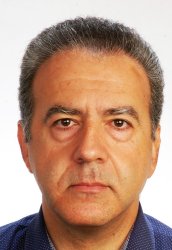
Professionnal title : Professor
Main affiliation : Dep. of Agriculture, Crop Production and Rural Development, School of Agricultural Sciences, University of Thessaly, Volos, GREECE
Karabatzaki 10A 38446 Volos
00306977502410
Presentation
George Vlontzos is an Agricultural Economics Professor, Director of the Laboratory of Agricultural Economics and Consumer Behaviour, (AGRECONLAB) University of Thessaly GREECE. His research interests focus on, among others, economic and environmental efficiency assessment, and on consumer behavior characteristics for agricultural inputs and foodstuff. For this, various models are being implemented like Data Envelopment Analysis, Stochastic Frontier, the Theory of Planned Behaviour, the Health Belief Model, etc. He has published several papers in journals under double blind peer review evaluation and participated in international congresses and seminars. Finally, he has participated, in competitive projects co-financed by the EU, national funding as well as private funding projects. He is the coordinator of the ALIANCE HORIZON EUROPE project, consortium member of the following HORIZON EUROPE projects NATAE, RESTPOLL, BUTTERFLY, FOODMISSION, GREENCOOP, and PROPOLSOILL, and consortium member of the following PRIMA projects GreenDriedFruits and DIONYSUS. Prof. George Vlontzos teaches agricultural economics and consumer behavior at the University of Thessaly, Greece.He was a visiting professor at the Center of Applied Optimization, University of Florida, USA. He is affiliated with IAMM CIHEAM institute of Montpellier, France, teaching consumer behavior for agricultural products and food at the MSc program MIDAS.
What I can bring to this network ?
My contribution to the network is my ability to organize technology transfer mechanisms in agriculture. More specifically, the Living Labs approach has been proven an effective mechanism for applying co-design protocols, bringing together stakeholders having a direct or indirect relevance with specific value chains.What I seek in this network ?
This network can broaden my collaboration network and provide valuable feedback for applying agroecology in a more integrated means.WERY Jacques
Professionnal title : Professor
Scientific fields : Agricultural Systems Agronomy
Main affiliation : L'Institut Agro
3 rue de la Frégate 34080 Montpellier
+33671916585
Presentation
Jacques WERY is Emeritus Professor at l’Institut Agro (France). He has been teaching crop physiology, agronomy and agricultural systems during 37 years before moving to science and partnership management as Deputy Director General Research of ICARDA based in Cairo (2018-2021) and as Director of Science and Partnership at l’Institut Agro (2021-2024). He has been board member of the Seamless project on integrated modelling of agricultural systems (2004-2009) and Executive Secretary of the European Society for Agronomy (2010-2018).What I can bring to this network ?
My time and passion in the coordination of the CoPSyS and the System-S platform.What I seek in this network ?
Sharing capacities and building projects in an interdisciplinary framework.CopSyS Value Proposition
Descheemaeker Katrien
Professionnal title : Professor
Scientific fields : Crop Modeling Agricultural Systems Agronomy
Main affiliation : Wageningen University and Research
Presentation
Katrien Descheemaeker is Professor Plant Production Systems in the Plant Science Group of Wageningen University (Netherlands). Katrien's research focuses on farming systems analysis, soil-plant-animal interactions, sustainable development and resource use efficiency, with a special interest in the functioning and dynamics of mixed crop-livestock systems. Current activities combine experimental trial work with simulation modelling to identify and assess options for sustainable intensification and climate-smart agriculture. Across various projects on smallholder farming systems in sub-Saharan Africa, Dr. Descheemaeker designs participatory and co-learning approaches that aim to co-design tailored agricultural technologies and practices to improve farm productivity, food security, resilience to shocks, and natural resource integrity.What I can bring to this network ?
Experience with research and education in systems analysis of agricultural systems. Educational material; tools and methods for systems analysisWhat I seek in this network ?
Lopez Ridaura Santiago
Professionnal title : Doctor
Scientific fields : Agricultural Systems Agronomy climate change
Main affiliation : CIMMYT
Secondary affiliation : INRA France
Presentation
Santiago Lopez-Ridaura: Mexican agronomist with more than 20 years of experience on the evaluation and design of more sustainable agricultural systems at different levels of analysis. With more than 60 scientific publications in a wide diversity of topics, his main area of expertise is around the sustainability of small-scale farming systems, ex-ante and ex-post multicriteria assessment, natural resource management, agroecology and food and nutritional security. He has led and participated in several projects worldwide related to the development and implementation of agricultural innovations and integrated farming systems research with a wide diversity of partners and students. He is currently a principal scientist in the Sustainable Agri-food Systems Program of CIMMYTWhat I can bring to this network ?
Expertise on methods and tools for systems analysis. Experiences in different contexts on the application of systems analysis methods and tools.What I seek in this network ?
Collaboration with other disciplinesOkori Patrick
Main affiliation : Regional Universities FORUM for capacity Building in Agriculture (RUFORUM)
151, Garden Hill Road Makerere University, 16811 Kampala
+256772683623
Presentation
Prof Patrick Okori an Agriculture Scientist and Education Leader is the Executive Secretary of RUFORUM (www.ruforum.org). He has previously served as Academic Dean and Science Leader at Makerere University in Uganda, Africa, responsible for academic reform, partnerships and resourcing. At the CGIAR, (ICRISAT), he was Principal Scientist- Groundnut Breeding, Country Representative, and Deputy Director of Research Programme on Accelerated Crop Improvement. He is a thought leader serving in national to global high-level strategy and visioning processes.What I can bring to this network ?
Vast experience in University led Graduate training and Human capital development for science and development mostly within Agriculture and allied sectors of the economyWhat I seek in this network ?
To engage with the CGIAR on cost-leveraged opportunities for capacity building and sharing in agriculture and related disciplines. My interest is who best we could work together to training the nest generation of science leaders (MSc PhD and post doctoral fellows, as well as specialised skilling in emerging science areas.Triomphe Bernard
Professionnal title : Doctor
Scientific fields : System Agronomy
Main affiliation : CIRAD
Secondary affiliation : Universidad Autonoma Chapingo (Mexico)
+525574072556
Presentation
My overall goal: contribute to the strengthening of small-scale family farming in tropical areas through the co-production of knowledge and approaches, the co-design and participatory dissemination of technical and social innovations at local, national and international levels, policy lobbying, as well as through capacity-sharing and linkage among R&D actors.My experience: Innovation systems & processes, multi-stakeholder collaboration, participatory monitoring and evaluation, impact evaluation, farmer innovation, participatory action research, facilitation of multi-stakeholder events and processes, agroecology and conservation agriculture, sustainable rural development, systemic diagnosis at the plot/farm/region/innovation system scales, capacity building for students, R&D professionals, farmers and local stakeholders. Mexico, Latin America, Africa
What I can bring to this network ?
wide international exposure and network, interfacing biophysical and social sciences, interfacing research and development partners, attention to local innovation, systems approach at various scales from field to territory,What I seek in this network ?
People and initiatives with a keen interest in devising and sharing participatory and systemic approaches among the R&D community and making sure they are actually implemented on the groundWERY Jacques
Professionnal title : Professor
Scientific fields : Agricultural Systems Agronomy
Main affiliation : L'Institut Agro
3 rue de la Frégate 34080 Montpellier
+33671916585
Presentation
Jacques WERY is Emeritus Professor at l’Institut Agro (France). He has been teaching crop physiology, agronomy and agricultural systems during 37 years before moving to science and partnership management as Deputy Director General Research of ICARDA based in Cairo (2018-2021) and as Director of Science and Partnership at l’Institut Agro (2021-2024). He has been board member of the Seamless project on integrated modelling of agricultural systems (2004-2009) and Executive Secretary of the European Society for Agronomy (2010-2018).What I can bring to this network ?
My time and passion in the coordination of the CoPSyS and the System-S platform.What I seek in this network ?
Sharing capacities and building projects in an interdisciplinary framework.de Divonne Philibert
Main affiliation : Institut Agro Montpellier
Secondary affiliation : Pôle tropiques et méditerranée
What I seek in this network ?
Des ressources épistémologiquesDefine an Issue as a System
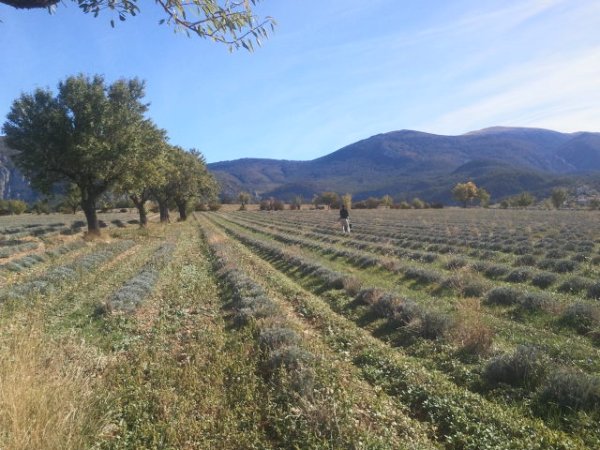
https://youtube.com/playlist?list=PLhqqzScnkli3lv7ipP3slTopLaC5ky87y
This protocol is a guide to conceptualize a challenge or an issue into a system with its boundary, components, relations and environment.
Methodology
Themes
AgricultureType de ressource
- Handbook
- Website Resource
Licence
Creatives commonsDescheemaeker Katrien
Professionnal title : Professor
Scientific fields : Crop Modeling Agricultural Systems Agronomy
Main affiliation : Wageningen University and Research
Presentation
Katrien Descheemaeker is Professor Plant Production Systems in the Plant Science Group of Wageningen University (Netherlands). Katrien's research focuses on farming systems analysis, soil-plant-animal interactions, sustainable development and resource use efficiency, with a special interest in the functioning and dynamics of mixed crop-livestock systems. Current activities combine experimental trial work with simulation modelling to identify and assess options for sustainable intensification and climate-smart agriculture. Across various projects on smallholder farming systems in sub-Saharan Africa, Dr. Descheemaeker designs participatory and co-learning approaches that aim to co-design tailored agricultural technologies and practices to improve farm productivity, food security, resilience to shocks, and natural resource integrity.What I can bring to this network ?
Experience with research and education in systems analysis of agricultural systems. Educational material; tools and methods for systems analysisWhat I seek in this network ?
Designing Agro-ecological vineyards cropping systems across France (Session 9)
Devkota Wasti Mina
Professionnal title : Doctor
Scientific fields : Agricultural Systems Agronomy
Main affiliation : International Center for Agriculture Research in the Dry Areas (ICARDA)
20 Rue Jabal Oukaimeden, Agdal, Rabat +212 Agdal
0662147864
What I can bring to this network ?
I can share regional experience on cropping systems, particularly from South Asia, Central Asia, and the MENA region. These regions encompass a wide range of agro-ecological zones, farming practices, and socio-economic contexts, which provide valuable insights into the design and adaptation of cropping systems.What I seek in this network ?
I seek to be an active and engaged member of the Cropping Systems Network, contributing to community of practice. I aim to both share insights from my regional and field experience and learn from the diverse perspectives and innovations of other members. I am particularly interested in supporting the advancement of integrated systems science—bringing together agronomy, ecology, socioeconomics, and policy—to inform and strengthen key research and development agendas. By working collaboratively, I hope to contribute to the co-creation of knowledge and solutions that address the complex challenges facing cropping systems across different agro-ecological and socio-economic contexts."El Graoui Marwa
Professionnal title : PhD candidate
Main affiliation : Mohammed VI Polytechnic University
Presentation
Last year PhD student at the College of Agriculture and Environmental Sciences at UM6P - Mohammed VI Polytechnic University, and upcoming Post-doctoral researcher at Cornell University - Atkinson center.What I can bring to this network ?
Passion and engagement - geospatial methods development - experience in biodiversity and genetic resources conservation.What I seek in this network ?
Multidisciplinary frameworks - learning more about systems dynamics and their design - expanding my network.Etherpad MyPads

Feleke Hirut Getachew
Assistant Professor
Scientific fields : Crop Modeling Agrometeorology Food Systems climate change
Main affiliation : Ambo University, Ambo Ethiopia
Secondary affiliation : Hawassa University, Hawassa, Ethiopia
Presentation
I am an agronomist, agrometeorologist, and crop modeller with a focus on the impacts of climate change on food security. Currently, I am working as a postdoctoral researcher, exploring how climate shifts affect agricultural systems and food availability. I am passionate about using interdisciplinary approaches to tackle complex challenges in agriculture and working towards sustainable solutions. I look forward to engaging with the community of practice at this workshop, where we can collaborate, share knowledge, and develop innovative strategies for resilient, sustainable agri-food futures.What I can bring to this network ?
Given my background as an agronomist, agrometeorologist, and crop modeller, I bring a strong understanding of how climate change impacts agricultural systems and food security. My interdisciplinary approach allows me to bridge the gap between science, policy, and practical solutions. I am eager to contribute my research and insights into sustainable agricultural practices, while also learning from and collaborating with others in this network. Together, we can work towards creating resilient and sustainable agri-food systems, especially in regions facing climate-related challenges.What I seek in this network ?
In this network, I seek to expand my understanding of global and regional challenges in agriculture, land, and water systems, particularly in the context of climate change. I am eager to collaborate with fellow experts from diverse disciplines to develop innovative, sustainable solutions for food security. Additionally, I hope to engage in capacity-building efforts and exchange knowledge that can be applied in both research and practical settings, especially in Africa and Mediterranean regions where these challenges are most pressing.First CopSyS Workshop
Objective 2: Extension of the CoP to African universities, other disciplines (social science, data science, economy and policy), and other systems (food, land, water systems); Outcome 2: A strategy to enlarge and a first list of colleagues to contact
Objective 3: Project development on capacity sharing: CapSha Use Case, Gap Analysis in Africa, Guidelines, Teaching module; Outcome 3: First draft of concept notes to approach donors
- Part of a larger event

Forum

FRANCOIS Alice
Professionnal title : Engineer
International Relation Office
Main affiliation : l'Institut Agro Montpellier
2 place Pierre Viala 34000 Montpellier
0685499892
Presentation
I have more than 20 years of international professional experience in the design and in the management of International Higher Education projects (at Master and Doctoral levels). From 2005 to 20012, I worked in the ABIES doctoral School, in charge of implementing joint training programs for PhD students (Erasmus Mundus Joint Doctorates and Initial training Networks).Since 2012, I am Deputy Head of l’Institut Agro Montpellier international relations office.
I am responsible for the development of new academic partnerships in Europe, South-East Asia, Northern America and Australia. I am in charge of the coordination of the participation of l’institut Agro to the European framework programme for Higher education (Erasmus + program) and in particular the key action 2. I am involved in the coordination of 2 strategic partnerships in 2023-2026 and in the steering group of the EUI SUSTAIN LIFE (2023-2024).
I am also in charge of the internationalization of PhD programs at l’Institut Agro.
What I can bring to this network ?
- Expertise on European higher Education Area- Expertise on International PhD programs / Joint PhD programs
Frija Aymen
Main affiliation : ICARDA
At INRAT, Av. Hedi Karray Ariana, Tunisia Tunis
Gap analysis of education on agroecology and sustainable agriculture in Africa (CDEAO) (Session 4)
GERARD Bruno
Professionnal title : Professor
Dean, College of Agriculture and Environmental Sciences
Main affiliation : University Mohammed VI Polytechnic
ALOUIDANE 30700 Marrakech
+212662827646
Presentation
With over 30 years of work experience in the field of agriculture and environmental sciences, I am currently the Dean of the College of Agriculture and Environmental Sciences at UM6P - Mohammed VI Polytechnic University. In this role, I oversee the academic, research, and outreach activities of the college, and foster collaboration and innovation among faculty, students, and partners. Prior to joining UM6P, I was the Director of the Sustainable Intensification Program at CIMMYT, where I managed a global team of researchers and practitioners working on improving the productivity and profitability of smallholder farmers. I have a PhD in Agronomy from Universität Hohenheim and a MSc in Irrigation Engineering from Utah State University and Agricultural Engineering degree from Université catholique de Louvain. My core competencies include strategic leadership, interdisciplinary collaboration, project management, and stakeholder engagement. My mission is to advance the knowledge and practice in agriculture and environmental sustainability, and to contribute to the social and economic development of the communities I serve. I value diversity, innovation, and excellence, and I strive to bring these values to my work and my team.What I can bring to this network ?
Experience, network, and passionWhat I seek in this network ?
Novel thinking for research and educationHamzat Azeez Adewale
Main affiliation : Mohammed VI Polytechnic University (UM6P)
UM6P 43150 Benguerir
212672044090
What I can bring to this network ?
Collective IntelligenceHanke-Louw Nora
Scientific fields : capacity sharing project management
Main affiliation : International Water Management Institute (IWMI)
Secondary affiliation : CGIAR
What I can bring to this network ?
Attending to explore and present further South-South networks and publications.What I seek in this network ?
Listening and networkingISG
• to contribute to CoP activities (communication, extended membership, webinar, provision of teaching materials, projects, papers, workshop…)
• to make the link with institutions, international programs, other CoP…
Belhouchette Hatem
Professionnal title : Professor
Researcher
Main affiliation : CIHEAM Montpellier
3191 route de Mende 34090 Montpellier
0619282623
Presentation
Hatem Belhouchette started his study Crop Production System at the National Institute of Agronomy-Tunisia in 1991. In 1995 Hatem graduated with a major in Crop production System and minors in Farm Economics. From 1996 to 1999 he realized, on irrigation cropping system in Mediterranean regions, a Master of Science in IAM-Bari.In 2000 he started his PhD study on Cropping System sustainability by using bio-economic approach associated to GIS system in Northern Tunisia. In 2004 he received his PhD.
Since 2003, he has been appointed at IAM-Montpellier institute as a lecturer and researcher in Agricultural Production Systems. His main expertise and interest is the development of operational methods for the assessment, exploration and design of agricultural production systems, both at field and farm levels. He is presently coordinating research network that aims at the development of a system for agro-economic and environmental modeling.He ran several national and international research projects, and supervises several Master and PhDs projects mainly on farming resilience analysis under climate change and market uncertainty topics.
What I can bring to this network ?
Methods and assumptions for working at the interface between different disciplines to design resilient agricultural systems.What I seek in this network ?
understand and learn how to better work at the interface between different disciplines to design performant systems.Descheemaeker Katrien
Professionnal title : Professor
Scientific fields : Crop Modeling Agricultural Systems Agronomy
Main affiliation : Wageningen University and Research
Presentation
Katrien Descheemaeker is Professor Plant Production Systems in the Plant Science Group of Wageningen University (Netherlands). Katrien's research focuses on farming systems analysis, soil-plant-animal interactions, sustainable development and resource use efficiency, with a special interest in the functioning and dynamics of mixed crop-livestock systems. Current activities combine experimental trial work with simulation modelling to identify and assess options for sustainable intensification and climate-smart agriculture. Across various projects on smallholder farming systems in sub-Saharan Africa, Dr. Descheemaeker designs participatory and co-learning approaches that aim to co-design tailored agricultural technologies and practices to improve farm productivity, food security, resilience to shocks, and natural resource integrity.What I can bring to this network ?
Experience with research and education in systems analysis of agricultural systems. Educational material; tools and methods for systems analysisWhat I seek in this network ?
GERARD Bruno
Professionnal title : Professor
Dean, College of Agriculture and Environmental Sciences
Main affiliation : University Mohammed VI Polytechnic
ALOUIDANE 30700 Marrakech
+212662827646
Presentation
With over 30 years of work experience in the field of agriculture and environmental sciences, I am currently the Dean of the College of Agriculture and Environmental Sciences at UM6P - Mohammed VI Polytechnic University. In this role, I oversee the academic, research, and outreach activities of the college, and foster collaboration and innovation among faculty, students, and partners. Prior to joining UM6P, I was the Director of the Sustainable Intensification Program at CIMMYT, where I managed a global team of researchers and practitioners working on improving the productivity and profitability of smallholder farmers. I have a PhD in Agronomy from Universität Hohenheim and a MSc in Irrigation Engineering from Utah State University and Agricultural Engineering degree from Université catholique de Louvain. My core competencies include strategic leadership, interdisciplinary collaboration, project management, and stakeholder engagement. My mission is to advance the knowledge and practice in agriculture and environmental sustainability, and to contribute to the social and economic development of the communities I serve. I value diversity, innovation, and excellence, and I strive to bring these values to my work and my team.What I can bring to this network ?
Experience, network, and passionWhat I seek in this network ?
Novel thinking for research and educationJEUFFROY Marie-Hélène
Professionnal title : Doctor
Scientific fields : System Agronomy
Main affiliation : INRAE
Secondary affiliation : IDEAS
1 place de l'agronomie 91120 PALAISEAU
33 6 83 70 24 27
Presentation
I am an agronomist, working on innovation in the cropping systems for the transition of the agrifood systems. I contributed to develop several methods to work on cropping systems analysis and design, particularly in real situations. I am currently the pilot of the national french network IDEAS (Initiative for the Design in Agrifood systems).What I can bring to this network ?
Methods, thinking, approaches, discussion, papers, controversies on system approach, from field, to agrifood system.What I seek in this network ?
scientific exchanges on system approach and developping this approach through sharing capacity buildingLopez Ridaura Santiago
Professionnal title : Doctor
Scientific fields : Agricultural Systems Agronomy climate change
Main affiliation : CIMMYT
Secondary affiliation : INRA France
Presentation
Santiago Lopez-Ridaura: Mexican agronomist with more than 20 years of experience on the evaluation and design of more sustainable agricultural systems at different levels of analysis. With more than 60 scientific publications in a wide diversity of topics, his main area of expertise is around the sustainability of small-scale farming systems, ex-ante and ex-post multicriteria assessment, natural resource management, agroecology and food and nutritional security. He has led and participated in several projects worldwide related to the development and implementation of agricultural innovations and integrated farming systems research with a wide diversity of partners and students. He is currently a principal scientist in the Sustainable Agri-food Systems Program of CIMMYTWhat I can bring to this network ?
Expertise on methods and tools for systems analysis. Experiences in different contexts on the application of systems analysis methods and tools.What I seek in this network ?
Collaboration with other disciplinesMcDonald Andrew
Professionnal title : Professor
Main affiliation : Cornell University
1114 Bradfield Hall, Cornell University 14853 Ithaca, NY
Presentation
Associate Professor of global cropping systems at Cornell University. 15+ years experience leading interdisciplinary teams conducting mission-driven research, principally in South Asia.What I can bring to this network ?
Development analogues from South Asia, mixed methods research approaches, agronomy fundamentals drawing on process-based understanding of system dynamicsWhat I seek in this network ?
New ways to conceptualize and operationalize the role of science towards accelerating sustainabiltiy transitions; collaborations for curricula, methods, and capacity development.Triomphe Bernard
Professionnal title : Doctor
Scientific fields : System Agronomy
Main affiliation : CIRAD
Secondary affiliation : Universidad Autonoma Chapingo (Mexico)
+525574072556
Presentation
My overall goal: contribute to the strengthening of small-scale family farming in tropical areas through the co-production of knowledge and approaches, the co-design and participatory dissemination of technical and social innovations at local, national and international levels, policy lobbying, as well as through capacity-sharing and linkage among R&D actors.My experience: Innovation systems & processes, multi-stakeholder collaboration, participatory monitoring and evaluation, impact evaluation, farmer innovation, participatory action research, facilitation of multi-stakeholder events and processes, agroecology and conservation agriculture, sustainable rural development, systemic diagnosis at the plot/farm/region/innovation system scales, capacity building for students, R&D professionals, farmers and local stakeholders. Mexico, Latin America, Africa
What I can bring to this network ?
wide international exposure and network, interfacing biophysical and social sciences, interfacing research and development partners, attention to local innovation, systems approach at various scales from field to territory,What I seek in this network ?
People and initiatives with a keen interest in devising and sharing participatory and systemic approaches among the R&D community and making sure they are actually implemented on the groundWERY Jacques
Professionnal title : Professor
Scientific fields : Agricultural Systems Agronomy
Main affiliation : L'Institut Agro
3 rue de la Frégate 34080 Montpellier
+33671916585
Presentation
Jacques WERY is Emeritus Professor at l’Institut Agro (France). He has been teaching crop physiology, agronomy and agricultural systems during 37 years before moving to science and partnership management as Deputy Director General Research of ICARDA based in Cairo (2018-2021) and as Director of Science and Partnership at l’Institut Agro (2021-2024). He has been board member of the Seamless project on integrated modelling of agricultural systems (2004-2009) and Executive Secretary of the European Society for Agronomy (2010-2018).What I can bring to this network ?
My time and passion in the coordination of the CoPSyS and the System-S platform.What I seek in this network ?
Sharing capacities and building projects in an interdisciplinary framework.Jacobson Michael
Professionnal title : Professor
Main affiliation : Penn State
Secondary affiliation : UM6P
309 Forest Resources Bldg 16802 University Park
+1 8144044920
Presentation
Dr. Michael Jacobson is a professor of forest resources at Penn State and an affiliate professor at UM6P. Throughout his over 30+ year career which includes work at the World Bank and Peace Corps, he has integrated extension, teaching and research to promote sustainable land use with interdisciplinary approaches bridging social and biophysical sciences. Major topics of interest include agroforestry, bioenergy, forest finance and economics and water-energy-food nexus. He teaches forest economics, global agricultural systems, agroforestry, and international forestry. He has significant presence in international activities, in dozens of countries but mainly focused on Africa. He is currently leading two international projects funded by the Belmont Forum and the National Science Foundation on drought/disaster risk and resilience indicators and water-energy-food nexus.What I can bring to this network ?
Thinking about economic tradeoffs in resource management decisions.What I seek in this network ?
First time I've participated with this group so need to listen and learn.JEUFFROY Marie-Hélène
Professionnal title : Doctor
Scientific fields : System Agronomy
Main affiliation : INRAE
Secondary affiliation : IDEAS
1 place de l'agronomie 91120 PALAISEAU
33 6 83 70 24 27
Presentation
I am an agronomist, working on innovation in the cropping systems for the transition of the agrifood systems. I contributed to develop several methods to work on cropping systems analysis and design, particularly in real situations. I am currently the pilot of the national french network IDEAS (Initiative for the Design in Agrifood systems).What I can bring to this network ?
Methods, thinking, approaches, discussion, papers, controversies on system approach, from field, to agrifood system.What I seek in this network ?
scientific exchanges on system approach and developping this approach through sharing capacity buildingKleftodimos Georgios
Professionnal title : Professor
Main affiliation : Mediterranean Agronomic Institute of Montpellier (CIHEAM-IAMM)
Secondary affiliation : Montpellier Interdisciplinary center on Sustainable Agri-food systems (social and nutritional sciences) - MOISA
3191 route de Mende 34093 MONTPELLIER
+33659549621
Presentation
Georgios Kleftodimos is an Associate Professor in Environmental and Agricultural Economics at CIHEAM Montpellier. His research focuses on integrating ecological complexity into economic and systems models to support agroecological transitions, farming systems sustainability, and resilient food systems. He specializes in the economic valuation of ecosystem services and leads work on the socio-economic impacts of biodiversity loss and environmental degradation. A core dimension of his work addresses the Water-Energy-Food-Ecosystems (WEFE) Nexus in the Mediterranean, promoting integrated governance and adaptive strategies to enhance resource-use efficiency and climate resilience. Through transdisciplinary approaches and stakeholder engagement, he explores how economic instruments, policy incentives, and systems thinking can align food production with environmental sustainability in resource-constrained regions.What I can bring to this network ?
I bring to this network a unique combination of environmental economics expertise and systems modeling experience, grounded in real-world applications across Mediterranean agricultural systems. My work connects ecological complexity with socio-economic realities, using tools such as bio-economic modeling, ecosystem service valuation, and WEFE Nexus frameworks to assess trade-offs and guide policy. I also contribute strong experience in transdisciplinary research coordination (e.g., DIONYSUS, RESTPOLL), participatory approaches, and capacity-building. I am eager to foster economic-policy integration within systems science and help co-design solutions that are scientifically robust, context-sensitive, and policy-relevant.What I seek in this network ?
I seek to collaborate with a diverse community of scientists committed to rethinking agricultural and environmental sustainability through a systems lens.Kleinermann Charles
Main affiliation : ICARDA
Secondary affiliation : CGIAR CapSha Accelerator
Presentation
What I can bring to this network ?
What I seek in this network ?
Kumar Shalander
Professionnal title : Professor
Deputy Global Research Program Director: Enabling Systems Transformation
Main affiliation : International Crops Research Institute for the Semi-Arid Tropics
shalander.kumar@icrisat.org 500075 Hyderabad
9989807521
Presentation
Dr Shalander Kumar leads the Markets, Institutions, and Policies cluster and is Deputy Global Research Program Director of the Enabling Systems Transformation Program at ICRISAT, Hyderabad. Dr Kumar has over three decades of experience working in Asia and Sub-Saharan Africa. Current focus of his work is on data driven systems approaches for scaling climate smart and nutrition sensitive agricultural value chains and food systems; tools and frameworks for co-designing holistic solutions for resilient farm and food systems; and food and development policy analysis around transformation, seed systems, agri-business opportunities, climate adaptation and mainstreaming millets.What I can bring to this network ?
Systems analysis, multicriteria and bioeconomic modelling for evaluating and co-designing systemic solutions bundles for systems transformationWhat I seek in this network ?
• Global networking to strengthen knowledge on systems science• Collaborative efforts on mainstreaming system science for addressing the wicked challenges of smallholder agri-food systems
Lamlili Nadia
Professionnal title : PhD candidate
Main affiliation : UM6P France
Presentation
Author and former journalist, I currently serve as Head of Social Innovation at UM6P France. I am pursuing a PhD in Development and Environmental Economics at Paris-Saclay University, within the framework of an action-research project to be conducted in Morocco. My doctoral research focuses on the intersection of gender dynamics and climate change adaptation in agricultural value chains in Africa.In parallel, I am a member of the scientific committee and responsible for the organization of the Autumn School "Socio-Economic Strategies for Sustainable Development in Rural Africa." This event, jointly organized by the Graduate School of Economics & Management at the University of Paris-Saclay (along with its research units UMI-SOURCE and UMR PSAE) and Mohammed VI Polytechnic University (including its College of Agriculture and Environmental Sciences and its Social Innovation Institute) with the support of « Agence Universitaire de la Francophone (AUF) » et OCP Foundation, will take place from October 27 to 31, 2025, at the Benguerir campus in Morocco. This Autumn School is a hands-on school, there will be an immersive work on real african case studies, fostering an interdisciplinary platform of exchange between researchers, PhD students, and professionals to stimulate innovation and strengthen the resilience of rural African territories.
I hold a Master’s degree in Geopolitics and Geo-economics of Emerging Africa, jointly awarded in 2023 by HEC Paris and Mohammed VI Polytechnic University (UM6P). My master’s thesis explored the impact of agricultural training programs on women’s empowerment in West Africa, through a case study of an initiative launched by OCP Africa in Senegal to train women in agricultural processing and marketing. The program was evaluated using the Women’s Empowerment in Agriculture Index for Market Inclusion (Pro-WEAI+MI), developed by the International Food Policy Research Institute (IFPRI), the U.S. Agency for International Development (USAID), and the Oxford Poverty and Human Development Initiative (OPHI).
Between 1997 and 2018, I held several senior editorial positions in the media sector in Morocco and France, most notably as Head of the Maghreb–Middle East section at Jeune Afrique magazine. In 2019, I published the novel "Une plume dans la plaie", which explores the challenges faced by a Moroccan newspaper under state censorship.
From 2020 to 2025, I served as Editorial Director of the think tank L’Afrique des Idées, which produces analyses and policy recommendations on major economic, political, and cultural issues affecting the African continent.
What I can bring to this network ?
As a researcher and practitioner at the intersection of development economics, gender studies, and climate resilience, I bring a cross-disciplinary perspective grounded in both field-based action-research and policy-oriented analysis. My current doctoral research explores gender dynamics and climate adaptation within agricultural value chains in Africa, with a particular focus on action-research in Morocco.In addition, as a member of the scientific committee of the Automn PHD School "Socio-Economic Strategies for Sustainable Development in Rural Africa.", I can bring a transdiciplinary knowledge based on real case studies in Africa, especially in contexts marked by socio-environmental complexity. I also bring strong communication skills, honed through a long career in journalism and authorship, which allow me to effectively translate scientific insights into accessible narratives for decision-makers and local communities.
What I seek in this network ?
This community of practice represents an opportunity to deepen my understanding of systems science tools and models and to engage in meaningful collaboration with researchers, practitioners, and system thinkers working on the complex interconnections between agriculture, gender, water governance and indigenous knowledge.Lopez Ridaura Santiago
Professionnal title : Doctor
Scientific fields : Agricultural Systems Agronomy climate change
Main affiliation : CIMMYT
Secondary affiliation : INRA France
Presentation
Santiago Lopez-Ridaura: Mexican agronomist with more than 20 years of experience on the evaluation and design of more sustainable agricultural systems at different levels of analysis. With more than 60 scientific publications in a wide diversity of topics, his main area of expertise is around the sustainability of small-scale farming systems, ex-ante and ex-post multicriteria assessment, natural resource management, agroecology and food and nutritional security. He has led and participated in several projects worldwide related to the development and implementation of agricultural innovations and integrated farming systems research with a wide diversity of partners and students. He is currently a principal scientist in the Sustainable Agri-food Systems Program of CIMMYTWhat I can bring to this network ?
Expertise on methods and tools for systems analysis. Experiences in different contexts on the application of systems analysis methods and tools.What I seek in this network ?
Collaboration with other disciplinesMacCarthy Dilys
Professionnal title : Professor
Scientific fields : Agricultural Systems
Main affiliation : University of Ghana
+233 244090502
Mati Bancy
Professionnal title : Professor
Water Management
Main affiliation : Professor at Jomo Kenyatta University of Agriculture and Technology, Kenya
Secondary affiliation : Convenor of SRI-Africa
Jomo Kenyatta University of Agric & Technology 00200 Nairobi
+254736353389
Presentation
Land and Water Management expert & Professor at JKUATWhat I can bring to this network ?
A lifetime of experiences in research, capacity building, project implementation and networking, while working with diverse stakeholders to improve land and water management in AfricaWhat I seek in this network ?
Link up with others in all disciplines so that as a collective, we enable Systems science to work for African agricultural systemsMazhoud Houda
Professionnal title : Professor
activist
Main affiliation : Research at INRAT
Secondary affiliation : VCA member
Rue Hedi Karray 1004 El Menzeh
+21622461628
McDonald Andrew
Professionnal title : Professor
Main affiliation : Cornell University
1114 Bradfield Hall, Cornell University 14853 Ithaca, NY
Presentation
Associate Professor of global cropping systems at Cornell University. 15+ years experience leading interdisciplinary teams conducting mission-driven research, principally in South Asia.What I can bring to this network ?
Development analogues from South Asia, mixed methods research approaches, agronomy fundamentals drawing on process-based understanding of system dynamicsWhat I seek in this network ?
New ways to conceptualize and operationalize the role of science towards accelerating sustainabiltiy transitions; collaborations for curricula, methods, and capacity development.Modelling the potential impact of climate change on the productivity of soybean in the Nigeria Savannas
A well-calibrated and evaluated GROPGRO module of the Decision Support System
for Agro-technological Transfer (DSSAT) was used to simulate productivity of soybean
in northern Nigeria under climate change. Both historical (1990–2019) and projected
climate scenarios from 5 general circulation models (GCMs) under two representative
concentration pathways (RCP 4.5 and RCP 8.5) in the mid-century (2040–2069) and
end of the century (2070–2099) periods were used. Depending on climate scenario, the
minimum temperature is expected to rise by 1.7–4.4oC at Kano in the Sudan savanna
(SS) agroecological zone (AEZ) and 1.4–4.0oC at Zaria in the northern Guinea savanna
(NGS) AEZ, while maximum temperatures are projected to increase by 1.7–4.1oC in the
SS and 1.3–3.6oC in the NGS. Seasonal average rainfall will increase by 4.8–14.5%
in the SS and decrease by 2.6–3.8% in the NGS, relative to the baseline climate. The
model predicted delaying trends for days to flowering and maturity for both varieties
in all climate scenarios in the two AEZs.
Methodology
Themes
AgricultureType de ressource
- Article
Licence
Non-Free licenceNewton Julie
Professionnal title : Other
Main affiliation : KIT institute
What I can bring to this network ?
gender expertiseWhat I seek in this network ?
greater understanding of system scienceNextcloud

Okori Patrick
Main affiliation : Regional Universities FORUM for capacity Building in Agriculture (RUFORUM)
151, Garden Hill Road Makerere University, 16811 Kampala
+256772683623
Presentation
Prof Patrick Okori an Agriculture Scientist and Education Leader is the Executive Secretary of RUFORUM (www.ruforum.org). He has previously served as Academic Dean and Science Leader at Makerere University in Uganda, Africa, responsible for academic reform, partnerships and resourcing. At the CGIAR, (ICRISAT), he was Principal Scientist- Groundnut Breeding, Country Representative, and Deputy Director of Research Programme on Accelerated Crop Improvement. He is a thought leader serving in national to global high-level strategy and visioning processes.What I can bring to this network ?
Vast experience in University led Graduate training and Human capital development for science and development mostly within Agriculture and allied sectors of the economyWhat I seek in this network ?
To engage with the CGIAR on cost-leveraged opportunities for capacity building and sharing in agriculture and related disciplines. My interest is who best we could work together to training the nest generation of science leaders (MSc PhD and post doctoral fellows, as well as specialised skilling in emerging science areas.OnlyOffice

PeerTube

Perspectives of Land & Water Management (for Agriculture) in Sub Saharan Africa
phpMyAdmin

Rizzo Davide
Professionnal title : Researcher
Scientific fields : Agronomy System Agronomy
Main affiliation : LISAH, IRD
2 place Pierre Viala, bât. 24, LISAH 34060 Montpellier
Presentation
My experience in agronomic research spans about two decades, focusing primarily on the study of decision-making processes and landscape agronomy.What I can bring to this network ?
I can bring to this network some reflexivity and a landscape perspective on agricultural system dynamicsWhat I seek in this network ?
I seek to learn more about existing approaches, especially towards transdisciplinaritySidibé Amadou
Professionnal title : Doctor
Main affiliation : Rural Polytechnic Institute for Training and Applied Research IPR-IFRA, Mali
Secondary affiliation : Beta Gamma Center for Research and Development
Kabala face campus universitaire 224C/8 côté BDM BP06 Bamako
+22376120945
Presentation
Amadou Sidibé is an associate professor and head of the research laboratory on social and economic dynamics under the department of economic and social sciences at the Rural Polytechnic Institute for Training and Applied Research (IPR-IFRA) in Katibougou, Mali. He holds a PhD in Agro-Socio-Economics from Wageningen University in the Netherlands. He is co-founder and director of the Beta Gamma Center for Research and Development, dedicated to research issues that transcend disciplinary barriers. His teaching and research areas focus on the analysis of value chains, food systems, the sustainability of agro-socio-ecological systems, innovation processes and technology studies.What I can bring to this network ?
I can bring to this network my experience in interdisciplinary and transdisciplinary research.What I seek in this network ?
In this network, I am open to learning, networking and co-creation.Snoussi Hager
Main affiliation : National Institute of Agricultural Research of Tunisia-INRAT
Rue Hedi Karray 1004 Tunis
Snyder Katherine
Professionnal title : Professor
Main affiliation : UM6P
Secondary affiliation : University of Arizona
PO Box 415 05353 Townshend
+18022588304
Presentation
I have carried out academic and applied research in Sub-Saharan Africa for over 20 years on the agrarian transformation, sustainable land management and community-based conservation. My focus is on farmer-driven innovations and co-production of knowledge.What I can bring to this network ?
Considerable fieldwork with farmers across Sub-Saharan Africa and long experience working in multidisciplinary teams on agricultural development challenges.What I seek in this network ?
Opportunities for collaboration and new learning.SONDE POUSGA Salimata
Professionnal title : Doctor
Scientific fields : Animal science
Main affiliation : Institut du Développement Rural (IDR). Universite Nazi BONI., Burkina Faso: https://www.univ-bobo.gov.bf
Secondary affiliation : Centre International de Recherche-Developpement sur l'Elevage en zone subhumide (CIRDES): www.cirdes.org
UNB 1091 Bobo Dioulasso
+22671092576
Presentation
I'am Dr Salimata POUSGA. DVM, PhD, Animal health, Nutrition and Management. Associate professor in Nazi BONI University, Bobo-Dioulasso, Burkina Faso. Currently, scientific Director of the International Center for Research and Development on livestock in Sub Humid zone (CIRDES).What I can bring to this network ?
sharing some experiences on the evidence of the need of system science in agricultural facultiesWhat I seek in this network ?
Learn from others about system science and sustainable agrifood future. NetworkingSpécial Session on System Science during FSD8
This event will be an opportunity to officialy launch the system-s collaborative platform of CopSyS.
- Part of a larger event
Strengthening the integration of Economy and Policy in System Science
Survey System Science
Descheemaeker Katrien
Professionnal title : Professor
Scientific fields : Crop Modeling Agricultural Systems Agronomy
Main affiliation : Wageningen University and Research
Presentation
Katrien Descheemaeker is Professor Plant Production Systems in the Plant Science Group of Wageningen University (Netherlands). Katrien's research focuses on farming systems analysis, soil-plant-animal interactions, sustainable development and resource use efficiency, with a special interest in the functioning and dynamics of mixed crop-livestock systems. Current activities combine experimental trial work with simulation modelling to identify and assess options for sustainable intensification and climate-smart agriculture. Across various projects on smallholder farming systems in sub-Saharan Africa, Dr. Descheemaeker designs participatory and co-learning approaches that aim to co-design tailored agricultural technologies and practices to improve farm productivity, food security, resilience to shocks, and natural resource integrity.What I can bring to this network ?
Experience with research and education in systems analysis of agricultural systems. Educational material; tools and methods for systems analysisWhat I seek in this network ?
Hanke-Louw Nora
Scientific fields : capacity sharing project management
Main affiliation : International Water Management Institute (IWMI)
Secondary affiliation : CGIAR
What I can bring to this network ?
Attending to explore and present further South-South networks and publications.What I seek in this network ?
Listening and networkingKumar Shalander
Professionnal title : Professor
Deputy Global Research Program Director: Enabling Systems Transformation
Main affiliation : International Crops Research Institute for the Semi-Arid Tropics
shalander.kumar@icrisat.org 500075 Hyderabad
9989807521
Presentation
Dr Shalander Kumar leads the Markets, Institutions, and Policies cluster and is Deputy Global Research Program Director of the Enabling Systems Transformation Program at ICRISAT, Hyderabad. Dr Kumar has over three decades of experience working in Asia and Sub-Saharan Africa. Current focus of his work is on data driven systems approaches for scaling climate smart and nutrition sensitive agricultural value chains and food systems; tools and frameworks for co-designing holistic solutions for resilient farm and food systems; and food and development policy analysis around transformation, seed systems, agri-business opportunities, climate adaptation and mainstreaming millets.What I can bring to this network ?
Systems analysis, multicriteria and bioeconomic modelling for evaluating and co-designing systemic solutions bundles for systems transformationWhat I seek in this network ?
• Global networking to strengthen knowledge on systems science• Collaborative efforts on mainstreaming system science for addressing the wicked challenges of smallholder agri-food systems
WERY Jacques
Professionnal title : Professor
Scientific fields : Agricultural Systems Agronomy
Main affiliation : L'Institut Agro
3 rue de la Frégate 34080 Montpellier
+33671916585
Presentation
Jacques WERY is Emeritus Professor at l’Institut Agro (France). He has been teaching crop physiology, agronomy and agricultural systems during 37 years before moving to science and partnership management as Deputy Director General Research of ICARDA based in Cairo (2018-2021) and as Director of Science and Partnership at l’Institut Agro (2021-2024). He has been board member of the Seamless project on integrated modelling of agricultural systems (2004-2009) and Executive Secretary of the European Society for Agronomy (2010-2018).What I can bring to this network ?
My time and passion in the coordination of the CoPSyS and the System-S platform.What I seek in this network ?
Sharing capacities and building projects in an interdisciplinary framework.Sustainable irrigation in semi-arid environments: Insights from the Guadiana Basin in Spain
Taulya Godfrey
Professionnal title : Lecturer
Main affiliation : Makerere University, College of Agricultural and Environmental Sciences
Makerere University 256 Kampala
+256772552279
Presentation
I am passionate about sustainability of natural resource management for multiple livelihood goalsWhat I can bring to this network ?
Wide experience with resource-poor smallholder farming systems in sub Saharan AfricaWhat I seek in this network ?
Expertise in coupling different simulation frameworks to capture the complex reality of mixed farming systems with perennial crops and livestock components.Teaching System Definition to students and professionals (Session 8)
The Mixteca Learning Landscape.
S.L.Ridaura@cgiar.org
Timenkar_2022_July_11
Timenkar_2022_July_12
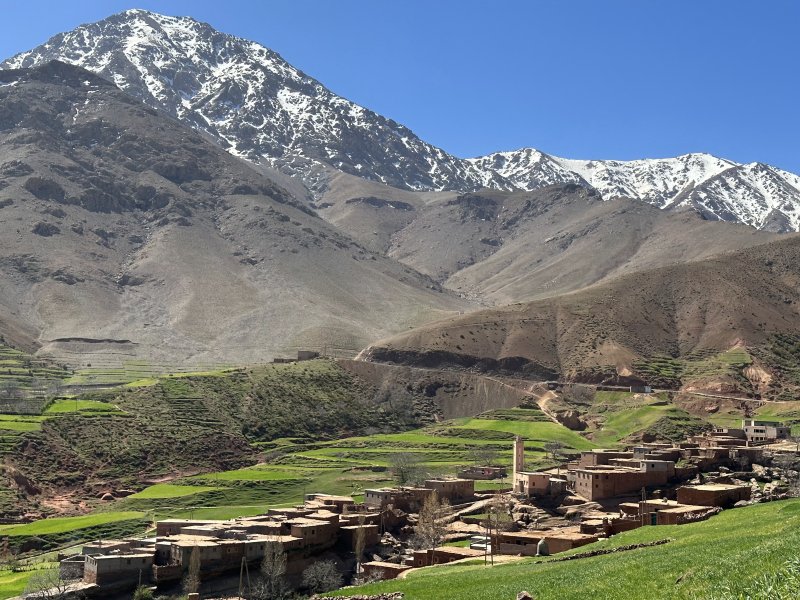
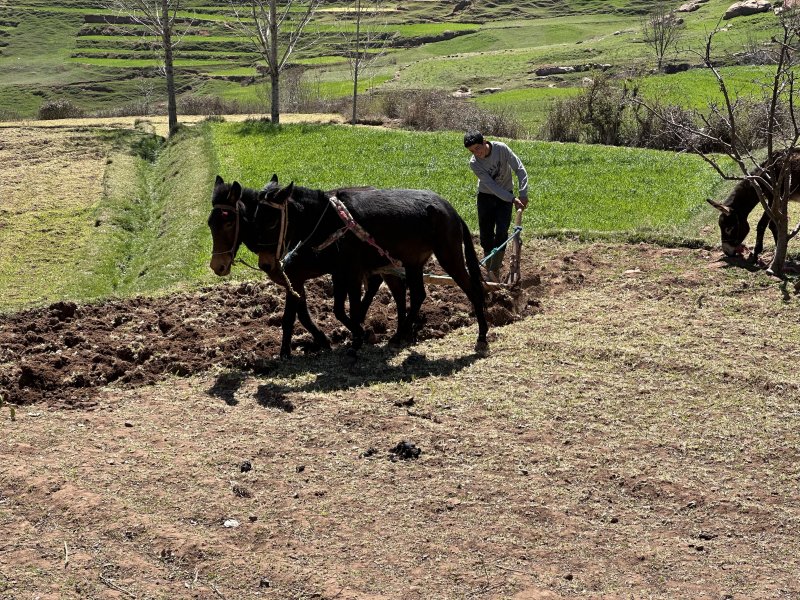
Timenkar_2025_May_2
production of grain with high nutritive value (coated seed rich in fiber and mineral compared to wheat) for traditional foods (bread, soups, dahl) production of grain for livestock: lamb fattening and pregnant females
production of quatlity straw for livestock feeding during winter. The local varieties have a low harvest index (around 0.3)meaning that they produce more straw than grain. early grazing of straw before winter in case of wet autumn and early sowing with compromising the heading and grain production.
late grazing of the whole crop in case of very dry spring.In that case the grain harvest would be anyway very low and is sacrified to preserve livestock feeding. in all cases grazing of straw after grain and straw harvest
* adaptation to drought and heat (compared to wheat) because of high tillering and earliness.
Q: is it an important component of the system to consider? Why and how does it interact with other system's components? A: yes because (i) the large share of the cropped area (ii) the contribution to human nutrition (direct through grain and indirect through livestock products) and to livestock nutrition (through grain, straw and grazing)
Q: how does it contribute to resilience of the agrifood system and the community to climate variability? A:because of (i) biology: adaptation to drought and heat (ii) management: allocation to human and animal feeding depending of rainfall distribution of the year.
Timenkar_2025_May_3
Q: which is the key natural resource used for this diversified cropping system ? A: water which is captured in the river, brought to fields and distributed with surface irrigation.
Q: how would you represent this landscape in the Timenkar plateau system? A: as a subsystem in interaction with the village and with the rainfed landscapes itself composed of different crops for human and animal feeding.
Timenkar_2025_May_7
- - A large and paved road is passing through the plateau since 5 years only
- - The road is both a component of the system allowing easy links bewteen villages and fields and a link with its environment (the city of Marrakech and adjacents valleys.
• Q : which positive effect do you see of this road for the communities of the plateau ? A : reduction of time spent (and costs ?) in commuting to nearby villages and to the city for off-farm activities ; link to market ; opportunities to go to school for children ; Q : others ?
• Q : Which negative effect do you see for the communities and farming systems of the plateau ? A : more opportunities for cash crops because of market linkages leading to focuss on these crops leading to reduction of agrobiodiversity at the expense of subsistence crops and biodiversity. Q : others ?
Timenkar_2025_May_9
Timenkar_2025_May_10
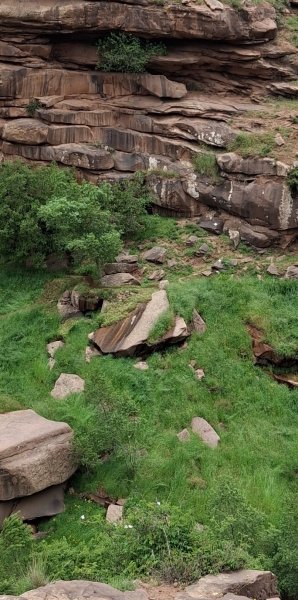
Triomphe Bernard
Professionnal title : Doctor
Scientific fields : System Agronomy
Main affiliation : CIRAD
Secondary affiliation : Universidad Autonoma Chapingo (Mexico)
+525574072556
Presentation
My overall goal: contribute to the strengthening of small-scale family farming in tropical areas through the co-production of knowledge and approaches, the co-design and participatory dissemination of technical and social innovations at local, national and international levels, policy lobbying, as well as through capacity-sharing and linkage among R&D actors.My experience: Innovation systems & processes, multi-stakeholder collaboration, participatory monitoring and evaluation, impact evaluation, farmer innovation, participatory action research, facilitation of multi-stakeholder events and processes, agroecology and conservation agriculture, sustainable rural development, systemic diagnosis at the plot/farm/region/innovation system scales, capacity building for students, R&D professionals, farmers and local stakeholders. Mexico, Latin America, Africa
What I can bring to this network ?
wide international exposure and network, interfacing biophysical and social sciences, interfacing research and development partners, attention to local innovation, systems approach at various scales from field to territory,What I seek in this network ?
People and initiatives with a keen interest in devising and sharing participatory and systemic approaches among the R&D community and making sure they are actually implemented on the ground
Un beau logo pour Yeswiki
Nous espérons que vous l'aimerez ;-)

Un nouveau thème pour Yeswiki
Margot permettra d'unifier les rendus graphiques des wikis.
Using Fuzzy Cognitive Maps for Sustainable Irrigation
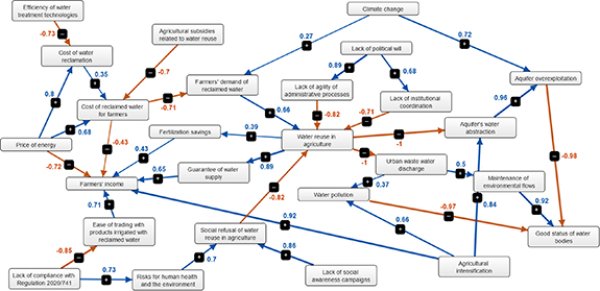
This work applies system science principles through the use of stakeholder-based Fuzzy Cognitive Mapping (FCM). It allows for a holistic understanding of how social, economic, and environmental variables interact, enabling the exploration of dynamic feedbacks and potential unintended consequences. In this context, FCM served as a valuable tool to simulate alternative policy and behavioural scenarios, identify leverage points, and support more informed decision-making for sustainable water reuse in agriculture.
Methodology
Themes
Agriculture WaterType de ressource
- Article
Licence
Creatives commonsVlontzos George
Professionnal title : Professor
Main affiliation : Dep. of Agriculture, Crop Production and Rural Development, School of Agricultural Sciences, University of Thessaly, Volos, GREECE
Karabatzaki 10A 38446 Volos
00306977502410
Presentation
George Vlontzos is an Agricultural Economics Professor, Director of the Laboratory of Agricultural Economics and Consumer Behaviour, (AGRECONLAB) University of Thessaly GREECE. His research interests focus on, among others, economic and environmental efficiency assessment, and on consumer behavior characteristics for agricultural inputs and foodstuff. For this, various models are being implemented like Data Envelopment Analysis, Stochastic Frontier, the Theory of Planned Behaviour, the Health Belief Model, etc. He has published several papers in journals under double blind peer review evaluation and participated in international congresses and seminars. Finally, he has participated, in competitive projects co-financed by the EU, national funding as well as private funding projects. He is the coordinator of the ALIANCE HORIZON EUROPE project, consortium member of the following HORIZON EUROPE projects NATAE, RESTPOLL, BUTTERFLY, FOODMISSION, GREENCOOP, and PROPOLSOILL, and consortium member of the following PRIMA projects GreenDriedFruits and DIONYSUS. Prof. George Vlontzos teaches agricultural economics and consumer behavior at the University of Thessaly, Greece.He was a visiting professor at the Center of Applied Optimization, University of Florida, USA. He is affiliated with IAMM CIHEAM institute of Montpellier, France, teaching consumer behavior for agricultural products and food at the MSc program MIDAS.
What I can bring to this network ?
My contribution to the network is my ability to organize technology transfer mechanisms in agriculture. More specifically, the Living Labs approach has been proven an effective mechanism for applying co-design protocols, bringing together stakeholders having a direct or indirect relevance with specific value chains.What I seek in this network ?
This network can broaden my collaboration network and provide valuable feedback for applying agroecology in a more integrated means.WERY Jacques
Professionnal title : Professor
Scientific fields : Agricultural Systems Agronomy
Main affiliation : L'Institut Agro
3 rue de la Frégate 34080 Montpellier
+33671916585
Presentation
Jacques WERY is Emeritus Professor at l’Institut Agro (France). He has been teaching crop physiology, agronomy and agricultural systems during 37 years before moving to science and partnership management as Deputy Director General Research of ICARDA based in Cairo (2018-2021) and as Director of Science and Partnership at l’Institut Agro (2021-2024). He has been board member of the Seamless project on integrated modelling of agricultural systems (2004-2009) and Executive Secretary of the European Society for Agronomy (2010-2018).What I can bring to this network ?
My time and passion in the coordination of the CoPSyS and the System-S platform.What I seek in this network ?
Sharing capacities and building projects in an interdisciplinary framework.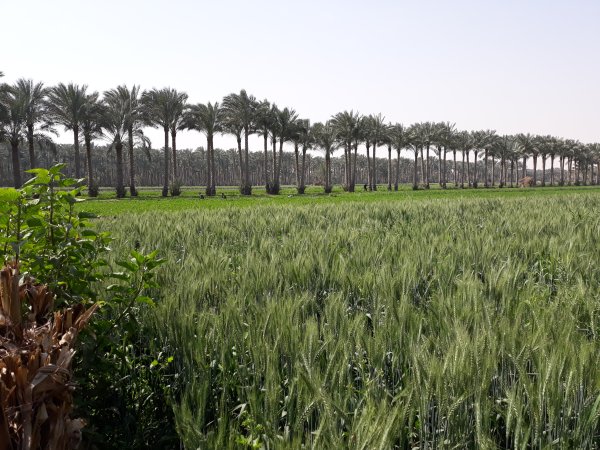
A system in 10 key words
Methodology
Themes
AgricultureType de ressource
- Website Resource
Licence
Creatives commonsYesWiki